

Worn garage floors, stained showroom surfaces, and damaged industrial concrete cost Queensland property owners thousands in repairs and lost appeal every year. Selecting the right epoxy coating transforms these problem areas into durable, attractive surfaces that withstand heavy use and harsh conditions. This comprehensive guide walks you through understanding epoxy chemistry, preparing your space properly, choosing coatings suited to your needs, and applying them for lasting results that protect your investment and enhance your property’s value.
Table of Contents
- Understanding Epoxy Coatings And Why They Matter
- Preparing Your Space: Essential Steps Before Choosing Epoxy Coatings
- Choosing The Right Epoxy Coating For Your Needs
- Application Tips And What To Expect After Epoxy Coating
- Explore Epoxy Floor Coating Solutions With Floor X Industries
- How To Choose Epoxy Coatings: Frequently Asked Questions
Key takeaways
| Point | Details |
|---|---|
| Chemical bonding | Professional epoxy coatings penetrate concrete pores and bond permanently at the molecular level |
| Preparation critical | Thorough cleaning, crack repair, and moisture testing ensure optimal adhesion and longevity |
| Match coating to use | Select epoxy types based on traffic levels, chemical exposure, and aesthetic preferences |
| Long-term benefits | Proper application delivers enhanced protection, safety, easy maintenance, and increased property value |
Understanding epoxy coatings and why they matter
Epoxy coatings represent a two-component system that transforms ordinary concrete into resilient, protective surfaces through chemical reaction. When you mix resin and hardener, they trigger a curing process that creates an incredibly strong bond with your concrete substrate. Unlike paint or sealers that sit on top of concrete, professional-grade coatings penetrate and bond at the molecular level, creating a permanent protective barrier that becomes part of your floor.
The chemistry behind this transformation is fascinating yet straightforward. Epoxy coatings cure through a chemical reaction, lose no mass, and penetrate open concrete pores, expanding as they cure to lock mechanically into your slab. This dual bonding mechanism, both chemical and mechanical, explains why properly applied epoxy floor coatings outlast surface treatments by years or even decades.
Queensland’s climate presents unique challenges for flooring. High humidity, temperature fluctuations, and intense UV exposure in outdoor areas demand coatings engineered for Australian conditions. Professional epoxy systems handle these stresses while providing multiple functional benefits beyond simple aesthetics.
The advantages extend across several critical areas:
- Protection against oils, chemicals, moisture, and abrasion that deteriorate bare concrete
- Enhanced safety through slip-resistant textures and high-visibility finishes
- Simplified maintenance with seamless, non-porous surfaces that resist staining
- Increased property value through professional appearance and documented durability
“Garage floor coatings create a barrier between your concrete and everything that can damage it, from hot tyres and battery acid to road salt and oil drips.”
For residential garages, commercial showrooms, and industrial facilities across Queensland, these benefits translate to lower lifetime costs and superior performance. Your floor becomes an asset rather than a maintenance burden, delivering returns through reduced cleaning time, fewer repairs, and extended service life that can span 15 to 25 years with proper care.
Preparing your space: essential steps before choosing epoxy coatings
Successful epoxy application starts long before you open the coating containers. Surface preparation determines whether your floor coating lasts decades or fails within months. Queensland’s concrete surfaces often harbour contaminants, moisture, and structural issues that compromise adhesion if left unaddressed.
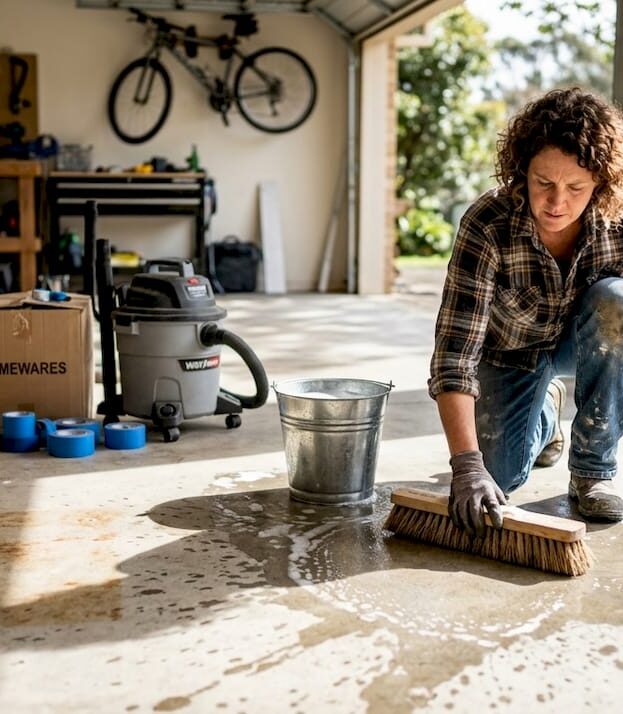
Start with thorough degreasing and cleaning. Oil stains, tyre marks, and chemical residues create invisible barriers that prevent epoxy penetration. Commercial degreasers formulated for concrete work best, followed by pressure washing to remove all traces of cleaning agents and loosened debris. Allow the surface to dry completely, typically 24 to 48 hours depending on humidity and ventilation.
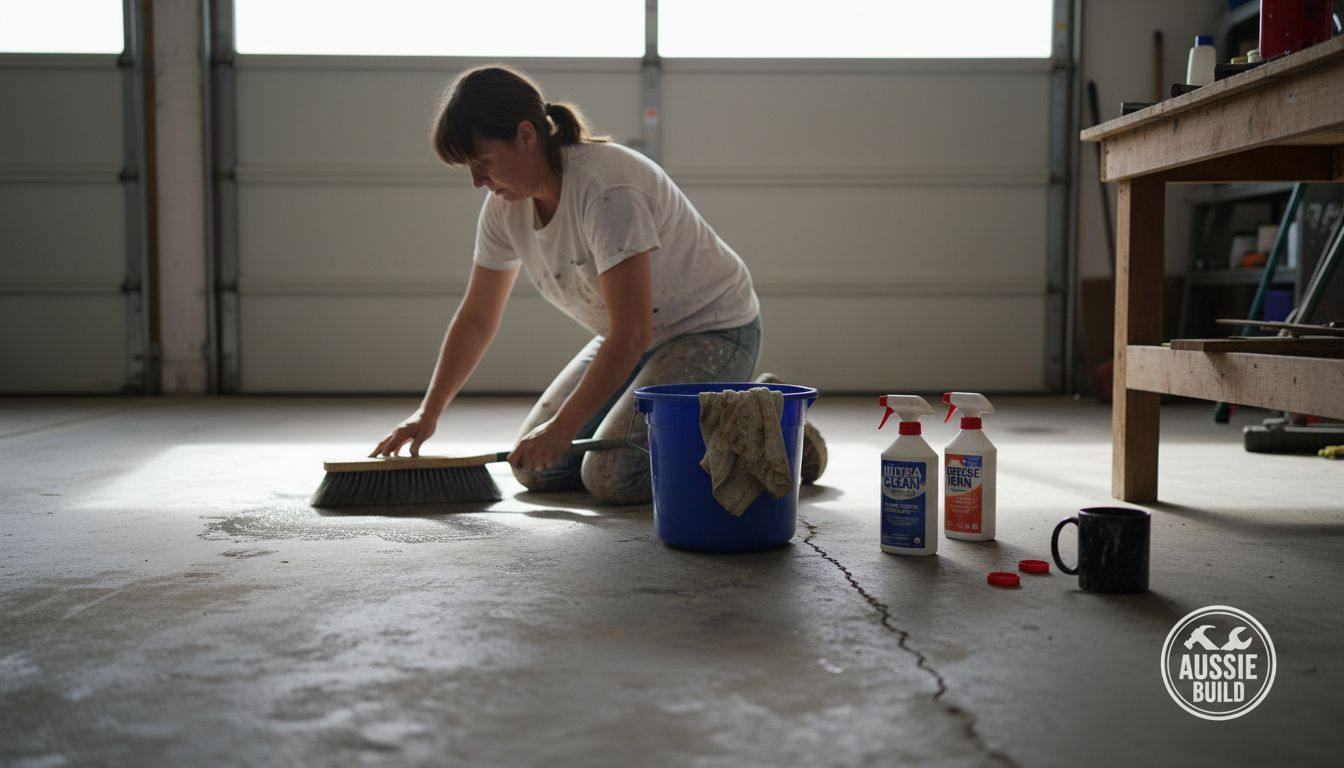
Next, inspect for cracks, spalling, and surface defects. Small cracks under 3mm wide can be filled with epoxy crack filler, while larger structural cracks may require professional assessment. Spalled areas where concrete has chipped or flaked need grinding to create sound, level surfaces. These repairs ensure your coating cures uniformly without weak spots that invite future failure.
Moisture testing represents the most critical prep step many DIY applicators skip. Concrete acts like a sponge, absorbing ground moisture that can push through coatings if vapour transmission rates exceed the epoxy’s tolerance. Simple plastic sheet tests or calcium chloride tests reveal moisture levels before you commit to coating. High readings require moisture mitigation systems or vapour-blocking primers to prevent delamination.
Follow this preparation sequence for optimal results:
- Remove all items, sweep thoroughly, and vacuum debris
- Apply degreaser to oil-stained areas and scrub vigorously
- Pressure wash the entire surface at 2000-3000 PSI
- Allow 48 hours minimum drying time in good ventilation
- Perform moisture testing using approved methods
- Fill cracks and repair damaged areas with appropriate fillers
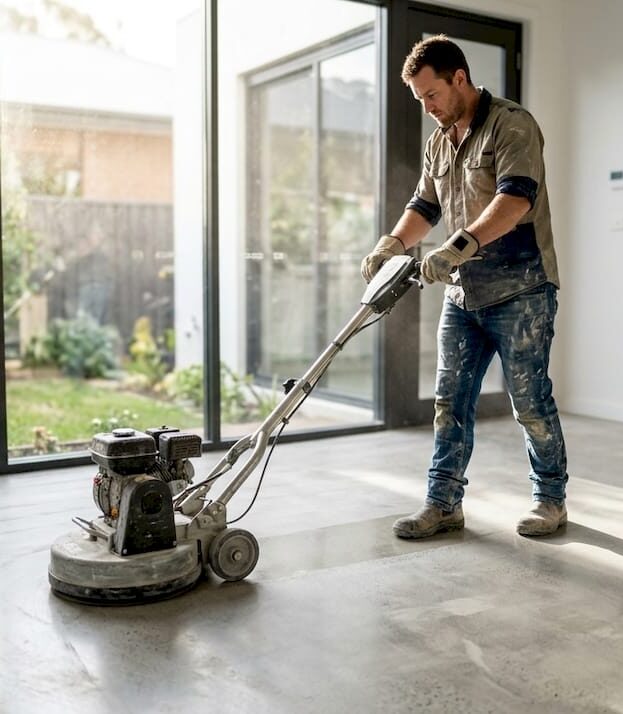
- Grind or etch the surface to open pores for mechanical bonding
- Vacuum again to remove all dust and grinding residue
Pro Tip: Queensland’s humidity makes timing crucial. Schedule prep work during dry periods and use fans to accelerate drying. Morning applications in cooler months provide ideal curing conditions without excessive moisture or heat stress.
Proper preparation creates the open, clean concrete pores that epoxy coatings penetrate during application, expanding and locking into your slab as they cure. Skipping these steps saves hours but costs years of performance. For detailed preparation guidance tailored to DIY applicators, explore our DIY epoxy garage floor upgrade resource.
Choosing the right epoxy coating for your needs
Not all epoxy coatings deliver the same performance, appearance, or value. Selecting the right system requires matching coating characteristics to your space’s specific demands, traffic patterns, and aesthetic goals. Queensland homeowners and businesses face choices across several coating categories, each engineered for particular applications.
Standard solvent-based epoxies offer excellent adhesion and chemical resistance for moderate-use garages and workshops. Water-based epoxies provide lower odour and easier cleanup, making them suitable for occupied spaces during application. 100% solids epoxies contain no solvents or water, delivering maximum thickness and durability per coat. These professional-grade systems excel in high-traffic commercial and industrial environments where performance justifies the higher material cost.
Compare key coating types:
| Coating Type | Durability | Chemical Resistance | Best Application | Typical Lifespan |
|---|---|---|---|---|
| Water-based epoxy | Moderate | Good | Residential garages, light commercial | 5-10 years |
| Solvent-based epoxy | High | Excellent | Workshops, showrooms, moderate industrial | 10-15 years |
| 100% solids epoxy | Very high | Superior | Heavy industrial, commercial kitchens | 15-25 years |
| Polyaspartic topcoat | Exceptional | Outstanding | All applications requiring UV stability | 20+ years |
Visual customisation options expand beyond simple colour selection. Decorative flakes in various sizes and colour blends create textured, slip-resistant surfaces that hide minor imperfections and add visual interest. Metallic epoxies produce stunning three-dimensional effects with swirling patterns unique to each installation. Quartz broadcast systems incorporate coloured quartz granules for maximum durability and texture in demanding environments.
Matching coating to usage intensity prevents premature wear and disappointment. Residential garages housing two vehicles and occasional DIY projects perform well with quality water-based or solvent-based systems. Retail showrooms with constant foot traffic and display changes benefit from 100% solids bases with polyaspartic topcoats for scratch resistance and UV stability. Industrial facilities handling chemicals, heavy equipment, or extreme temperatures require specialised formulations engineered for those specific stresses.
Consider these selection factors:
- Expected traffic volume and weight loads
- Chemical exposure from vehicles, products, or processes
- Temperature ranges and thermal cycling frequency
- Moisture exposure and cleaning methods
- Aesthetic requirements and brand image considerations
- Budget constraints and expected return on investment
Pro Tip: Queensland’s intense sunlight degrades standard epoxies in outdoor or UV-exposed areas. Specify aliphatic polyurethane or polyaspartic topcoats for patios, breezeways, and spaces with significant sun exposure to prevent yellowing and chalking.
Garage floor coatings provide durable, seamless, and easy-to-maintain surfaces when properly matched to their intended use. For detailed comparisons of coating chemistry and performance characteristics, review our epoxy vs polyurethane floors analysis to understand which system best serves your Queensland property.
Application tips and what to expect after epoxy coating
Professional application techniques separate durable, beautiful floors from disappointing failures. Whether you hire experts or tackle the project yourself, understanding proper methods ensures optimal results that deliver the full performance potential of quality epoxy systems.
Timing and environmental control make or break epoxy applications in Queensland’s variable climate. Ideal conditions fall between 15°C and 25°C with relative humidity below 85%. Higher temperatures accelerate curing, reducing working time and potentially causing surface defects. Lower temperatures slow curing excessively, extending downtime and increasing contamination risk. Monitor weather forecasts and choose application windows with stable conditions for at least 48 hours post-application.
Mixing requires precision and attention to manufacturer specifications. Combine resin and hardener in exact ratios using clean containers and mixing tools. Incomplete mixing leaves uncured pockets that remain soft indefinitely. Over-mixing introduces excessive air bubbles that create surface imperfections. Mix thoroughly for the specified time, typically two to three minutes, then allow a brief induction period before application.
Follow this application sequence for professional results:
- Apply primer coat if specified by manufacturer or required for moisture control
- Cut in edges and corners with brush or small roller
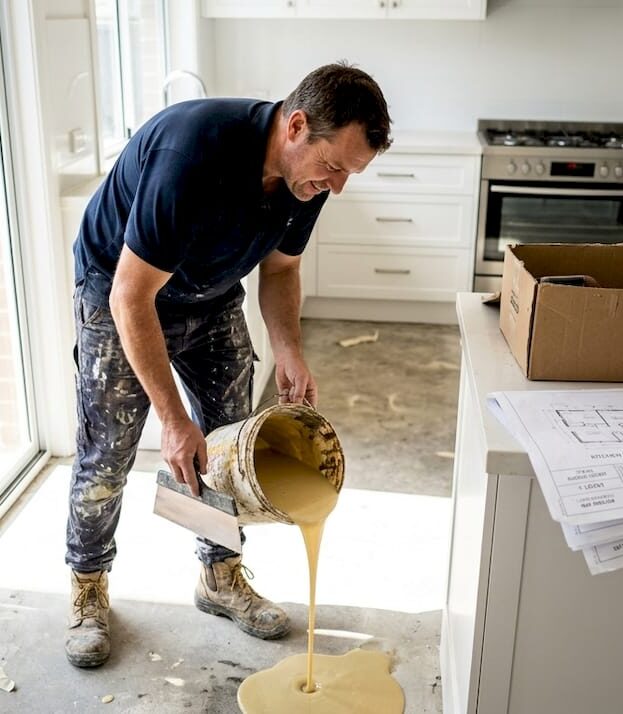
- Pour mixed epoxy in ribbons across the floor surface
- Spread evenly using notched squeegee or roller at specified thickness
- Back-roll perpendicular to spreading direction to eliminate lines
- Broadcast decorative flakes immediately if using textured finish
- Allow initial cure per manufacturer specifications before foot traffic
- Apply topcoat or sealer after base coat cures fully
Common mistakes sabotage otherwise sound applications. Applying coatings too thin reduces durability and chemical resistance. Rushing between coats before proper cure compromises inter-coat adhesion. Working in direct sunlight or high winds introduces contaminants and causes uneven curing. Inadequate ventilation during solvent-based applications creates health hazards and poor curing conditions.
“The benefits of coating your garage floor extend beyond aesthetics: protection against damage, enhanced durability, improved safety, simplified maintenance, and increased property value all contribute to long-term returns on your investment.”
Curing times vary by product and conditions. Most epoxies allow light foot traffic after 24 hours but require 72 hours before vehicle traffic. Full chemical cure takes seven days, during which you should avoid harsh chemicals, standing water, and heavy impacts. Queensland’s warmth generally accelerates curing compared to cooler climates, but high humidity can extend surface cure times.
Pro Tip: Document your application with photos and detailed notes including product names, batch numbers, mixing ratios, and environmental conditions. This information proves invaluable for maintenance planning and future repairs or expansions.
Maintenance extends your floor’s lifespan and appearance significantly. Sweep or vacuum regularly to remove abrasive dirt and debris. Clean spills promptly using pH-neutral cleaners and soft mops. Avoid harsh solvents, abrasive scrubbers, and steam cleaners that can damage the coating surface. Place protective pads under heavy equipment and use floor mats in high-traffic areas.
Expect lasting benefits from proper application including 15 to 25 years of service life for quality systems. Your floor will resist staining, simplify cleaning, enhance safety through improved lighting and traction, and maintain its professional appearance with minimal effort. For comprehensive application guidance including troubleshooting common issues, consult our DIY epoxy flooring guide designed specifically for Queensland conditions.
Explore epoxy floor coating solutions with Floor X Industries
Transforming your Queensland garage, showroom, or industrial space with professional epoxy coatings delivers immediate visual impact and decades of functional benefits. Floor X Industries specialises in epoxy floor coatings services engineered for Australian conditions, combining proven chemistry with expert application techniques honed over thousands of successful installations across the Gold Coast and beyond.

Whether you need durable stylish epoxy coatings for a residential garage or industrial-grade systems for demanding commercial environments, their team provides tailored solutions that match your specific requirements and budget. Explore their comprehensive range of finishes, colours, and performance options. For DIY enthusiasts seeking professional guidance, their epoxy flooring DIY guide offers step-by-step instructions backed by industry expertise. Contact Floor X Industries today to discuss your flooring project and discover how the right epoxy coating transforms your concrete surfaces into valuable, long-lasting assets.
How to choose epoxy coatings: frequently asked questions
How long do epoxy floor coatings typically last?
Professional-grade epoxy systems properly applied to well-prepared concrete last 15 to 25 years in residential and commercial applications. Industrial environments with extreme chemical exposure or heavy equipment may see 10 to 15 years. Lifespan depends on coating quality, preparation thoroughness, application technique, and ongoing maintenance practices.
Can I apply epoxy coatings myself or hire professionals?
DIY application is feasible for smaller residential projects if you follow manufacturer instructions precisely and invest time in proper surface preparation. Professional installation ensures optimal results for larger areas, complex spaces, or high-performance requirements where mistakes prove costly. Professionals bring specialised equipment, proven techniques, and warranty protection that justify the investment for commercial and industrial applications.
Are epoxy coatings suitable for outdoor Queensland spaces?
Standard epoxies yellow and chalk under Queensland’s intense UV exposure, making them unsuitable for fully outdoor applications. Aliphatic polyurethane or polyaspartic topcoats over epoxy bases provide excellent UV stability for patios, breezeways, and partially covered areas. Fully exposed outdoor spaces may benefit from alternative systems like polyaspartic coatings or polished concrete with penetrating sealers.
How do I maintain epoxy floors to keep them looking good?
Regular sweeping or vacuuming removes abrasive dirt that dulls the surface over time. Clean spills promptly with pH-neutral cleaners and soft mops or microfibre cloths. Avoid harsh solvents, abrasive scrubbers, and excessive water that can damage the coating. Periodic reapplication of topcoat sealer every three to five years refreshes appearance and extends overall lifespan.
What factors affect the cost of epoxy floor coatings?
Material quality represents the primary cost driver, with 100% solids systems costing significantly more than water-based options. Surface preparation requirements including crack repair, grinding, and moisture mitigation add labour and material expenses. Floor size, complexity, and decorative elements like metallic effects or custom colours influence total investment. Professional installation doubles or triples material-only costs but includes surface prep, application expertise, and warranty coverage that protect your investment.