
Warehouse Epoxy Flooring Australia: Cost Per m², Longevity & What Every Warehouse Owner Needs to Know
Last Updated: June 2026 | Author: Floor X Industries Team | Reading Time: 9 minutes
Warehouse epoxy flooring in Australia costs between AUD $35–$160 per m² installed, depending on warehouse size, concrete condition, coating system, and load requirements. Industrial-grade systems built for forklifts, chemical exposure, and heavy traffic typically range from $60–$120+ per m², while basic commercial coatings start from around $35–$50 per m².
Key takeaway: Getting the right epoxy system matters more than choosing the cheapest quote. A properly specified warehouse floor can last for years, reduce maintenance issues, and improve safety across your facility.
Get a Free Warehouse Floor Assessment from Floor X Industries
Australia Warehouse Epoxy Flooring Cost Per Square Metre 2026
For Australian warehouses, epoxy flooring costs around $35–$160 per m² installed in 2026. The reason for the wide price range is simple: a standard storage shed has very different flooring requirements compared to a cold-storage facility running heavy forklifts around the clock.
Here is a fast breakdown of typical warehouse epoxy flooring costs in Australia:
| Warehouse Type | Estimated Cost Per m² | System Used |
|---|---|---|
| Basic storage / light use | $35–$55 | Single-coat epoxy seal |
| General commercial warehouse | $55–$80 | 2-coat epoxy system |
| Heavy forklift traffic | $75–$110 | High-build industrial epoxy |
| Chemical / food-grade warehouse | $90–$130 | Chemically resistant polyurethane or epoxy system |
| Cold storage / freezer rooms | $100–$160 | Specialist low-temperature resin system |
| Large-format 1,000m²+ warehouse | $35–$50 | Grind and seal system with volume pricing |
Real example: A 500m² general-purpose warehouse in South East Queensland using a standard industrial 2-coat epoxy system typically comes in between $32,500–$45,000 fully installed. This usually includes diamond grinding, primer, build coat, and topcoat.
Cheap quotes often skip the diamond grinding phase. At Floor X Industries, our pricing includes industrial-grade surface preparation in every estimate because a floor is only as good as the concrete underneath it.
Epoxy Flooring Cost Per m² Australia: Commercial Warehouse Breakdown
Understanding where your money goes helps you compare warehouse epoxy flooring quotes properly. A full commercial warehouse epoxy installation in Australia is usually made up of surface preparation, materials, labour, and specialist application requirements.
Surface Preparation: 30–40% of Total Cost
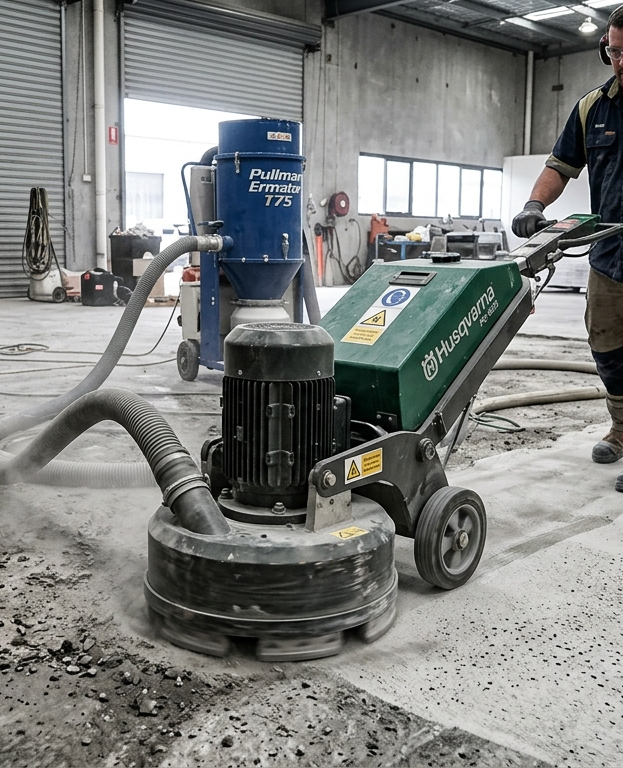
Surface preparation is the most important step in any warehouse epoxy flooring project. It is also the step that budget operators often skip.
For warehouses, surface preparation can include:
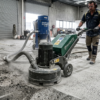
- Diamond grinding: Usually $15–$25 per m². This opens the concrete surface so the epoxy can bond properly instead of sitting on top.
- Shot blasting: Often used for very large areas because it is faster and more consistent for 1,000m²+ warehouses.
- Crack repair and joint filling: Usually $5–$15 per linear metre.
- Moisture testing and barrier application: Around $8–$20 per m² where required.
If a quote does not include mechanical diamond grinding, it is not a true industrial flooring quote. Acid etching is a budget shortcut and can leave warehouse floors vulnerable to peeling within 18 months under heavy use.
Materials: 40–50% of Total Cost
Not all epoxy systems are the same. For warehouse use, the key specifications include:
- Coating thickness: Industrial warehouse floors usually need 3–6mm build coats, not the 0.3–1mm thickness found in basic DIY kits.
- Chemical resistance: Warehouses handling oils, solvents, cleaning chemicals, or food products need a system rated for that exposure.
- Slip resistance: Anti-slip aggregates or textured topcoats are essential for safety compliance in Australian workplaces.
- UV stability: If any part of your warehouse receives sunlight, a UV-stable topcoat helps prevent yellowing and chalking.
Labour and Application: 20–30% of Total Cost
Professional warehouse-scale application requires specialist equipment, including large-format grinders, commercial squeegees, forced-air ventilation, and experienced installers. A warehouse epoxy flooring project should not be priced or installed like a small residential garage floor.
How Long Does Warehouse Epoxy Flooring Last?
A properly installed industrial epoxy floor in an Australian warehouse can last 10–20 years with correct maintenance. Poorly prepared or underspecified floors can fail in as little as 2–5 years.
What Makes Warehouse Epoxy Flooring Last Longer?
- Diamond grinding before application instead of acid etching
- The correct system specified for your warehouse load and traffic level
- Moisture testing before installation
- Polyurethane or polyaspartic topcoat for UV and wear resistance
- Correct curing time, typically 48–72 hours before vehicle traffic
What Causes Warehouse Epoxy Flooring to Fail Early?
- Forklift tyre marks from hard rubber tyres on undersized systems
- Chemical spills on coatings that are not chemically resistant
- Moisture vapour transmission from concrete without a barrier coat
- Point loads from racking legs on thin coating systems
- Queensland and coastal humidity during installation affecting adhesion
Expected Lifespan by Epoxy Flooring System
| System Type | Expected Lifespan |
|---|---|
| Basic single-coat epoxy | 3–5 years in warehouse use |
| Standard 2-coat commercial epoxy | 7–10 years |
| Industrial high-build system | 12–15 years |
| Polyurethane or polyaspartic topcoat system | 15–20+ years |
| Cold-store specialist system | 10–15 years |
What Type of Epoxy Does a Warehouse Actually Need?
The right warehouse epoxy flooring system depends on what the facility actually does. A food production facility, a cold-storage warehouse, and a general distribution centre all need different systems.
Standard Warehouse and Distribution Centre
Best system: 2-coat solvent-free epoxy with an anti-slip aggregate topcoat.
Why: This system handles pedestrian traffic, pallet jacks, and light forklifts. It is cost-effective, easy to maintain, and suitable for general warehouse use.
Avoid: Single thin-coat systems, as they will not survive loaded forklift traffic long-term.
Heavy Industrial and Manufacturing Facilities
Best system: High-build industrial epoxy at 4–6mm, or polyurethane cement for extreme conditions.
Why: These systems are designed to handle heavy forklifts, thermal shock, chemical spills, and vibration from machinery.
Typical cost: $90–$140 per m².
Food Production, Food Storage, and Cold Chain Facilities
Best system: HACCP-certified antimicrobial epoxy or polyurethane cement with coved skirting.
Why: This system supports Australian food safety requirements, handles wash-down environments, and uses coved edges to help prevent bacterial growth.
Typical cost: $85–$130 per m².
Important note: Food-grade warehouse flooring should comply with relevant AS/NZS standards. Always ask your installer for certification and product datasheets.
E-commerce and Fulfilment Centres
Best system: High-gloss 2-coat epoxy with defined aisle markings.
Why: Reflective epoxy flooring can improve lighting efficiency, support WHS-compliant floor markings, and handle constant light-vehicle traffic.
Bonus: Bright, clean floors can improve pick accuracy, warehouse organisation, and staff safety.
Workshops with Chemical Exposure
Best system: Chemical-resistant epoxy with a rating suited to your specific chemicals.
Why: Not all epoxies resist all chemicals. Solvents, acids, oils, and alkalis may require different formulations.
Critical step: Provide your installer with a full list of chemicals used in your facility before the system is specified.
What Affects the Cost of Epoxy Flooring in an Australian Warehouse?
If you have received multiple quotes and the prices are very different, these are the main reasons why.
1. Concrete Condition
A new concrete slab usually needs minimal preparation. A 20-year-old industrial floor with oil contamination, cracks, or previous failed coatings can cost 40–60% more to prepare properly.
2. Warehouse Size
Larger projects usually reduce the cost per square metre. A 5,000m² distribution centre will generally cost less per m² than a 200m² workshop because volume pricing applies to both materials and labour.
3. Location Within Australia
Gold Coast and South East Queensland pricing is often competitive compared to Sydney and Melbourne metro areas. Regional and remote locations may add transport costs for materials, equipment, and installation crews.
4. Humidity and Season
Australian summer humidity, especially in Queensland, can affect epoxy cure times and adhesion if not managed correctly. Quality installers monitor weather conditions and schedule around temperature, humidity, and dew point requirements.
5. Downtime Constraints
If your warehouse cannot shut down for more than 48 hours, you may need a faster-curing system such as polyaspartic. Polyaspartic systems cost more but can cure in 4–8 hours compared with 24–72 hours for standard epoxy.
6. Existing Floor Markings and Features
Removing old line markings, grinding out failed coatings, repairing joints, and working around drainage channels can all increase preparation time and total project cost.
Warehouse Epoxy vs. Polished Concrete: Which One Wins?
Both epoxy flooring and polished concrete are popular options for Australian warehouses. The right choice depends on how your facility is used.
| Factor | Epoxy Flooring | Polished Concrete |
|---|---|---|
| Cost | $35–$160 per m² | $50–$100 per m² |
| Chemical resistance | Excellent with the correct system | Poor without sealer |
| Slip resistance | Easily customised | Can be slippery when wet |
| Repair ease | Visible patches may occur | Can be spot ground and polished |
| Heat and forklift tyre resistance | Strong with high-build systems | Excellent |
| Aesthetics | Colour and line-marking options | Premium industrial appearance |
| Longevity | 10–20 years | 20–30 years with resealing |
| Best for | Chemical exposure, food facilities, cold chain, workshops | Dry goods storage, showrooms, general warehousing |
The verdict: For warehouses handling chemicals, food products, or cold chain operations, epoxy flooring usually wins on performance. For dry goods storage or showroom-style facilities, polished concrete may be worth considering for long-term value.
The Installation Process: What to Expect
A quality warehouse epoxy flooring installation follows a clear process. Use this as a checklist when evaluating installers.
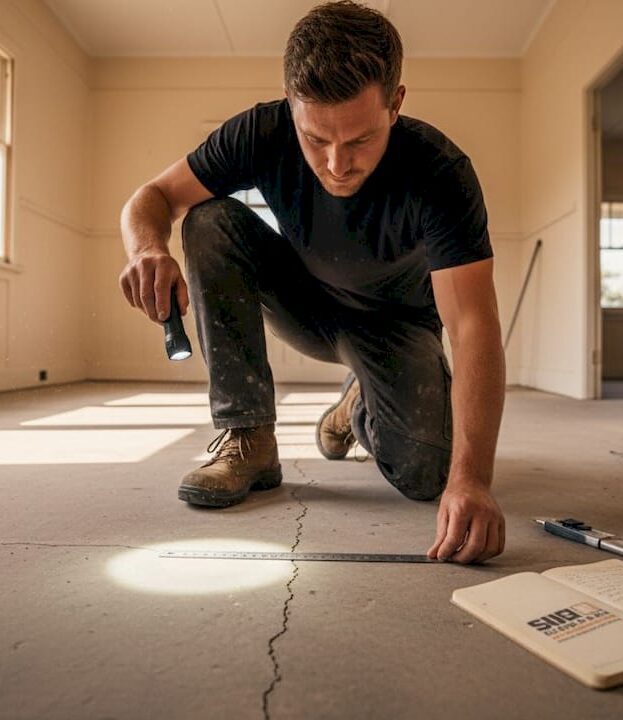
- Site assessment: Measure the area, test concrete moisture levels, identify contamination, and assess existing damage.
- Quote and system specification: Provide a written scope including product datasheets, coating thickness, and warranty terms.
- Surface preparation: Diamond grind the concrete to achieve the required concrete surface profile, then repair cracks and treat joints.
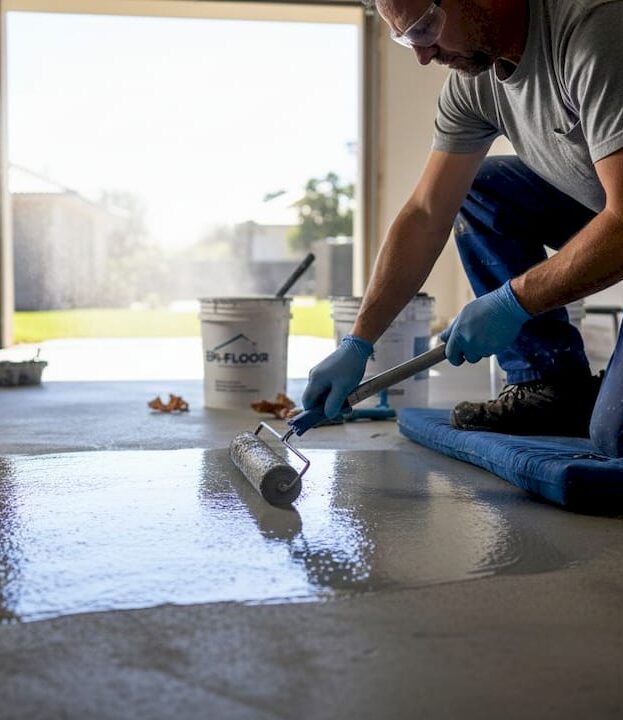
- Primer coat: Apply a low-viscosity epoxy primer to penetrate concrete pores, seal the surface, and create a strong bond layer.
- Build coat: Apply industrial-grade epoxy at the specified thickness, with anti-slip aggregate broadcast if required.
- Topcoat: Apply polyurethane or polyaspartic sealer for UV, chemical, and wear resistance.
- Cure time: Allow around 24 hours for light foot traffic, 48–72 hours for vehicle traffic, and up to 7 days for full cure.
- Line marking: Apply safety lines, aisle markings, and bay numbers after the floor has cured.
Red Flags During the Quoting Process
- No moisture testing mentioned
- No product datasheets provided
- The quote does not specify coating thickness
- Unrealistically short installation timelines
- No written warranty
People Also Ask
How much does it cost to epoxy a 500m² warehouse floor in Australia?
A 500m² warehouse floor using a standard 2-coat industrial epoxy system costs approximately $32,500–$45,000 fully installed in Australia in 2026. This usually includes diamond grinding, primer, build coat, and anti-slip topcoat.
How long does epoxy flooring last in a warehouse?
A properly installed industrial epoxy floor can last 10–20 years in a warehouse environment. The main factors are correct surface preparation, a system specified for the actual load and traffic type, and the use of a suitable topcoat.
What is the best epoxy system for a warehouse with forklifts?
For warehouses with regular forklift traffic, a high-build industrial epoxy system of 4–6mm is recommended. For extreme heavy use, polyurethane cement is usually the most durable option. Standard thin-coat systems are not suitable for loaded forklift traffic over the long term.
Does warehouse epoxy flooring work in Queensland’s humidity?
Yes, but it requires proper scheduling and experienced installers. Queensland’s high humidity can affect epoxy adhesion if temperature and dew point conditions are not managed correctly during application.
Can I epoxy over an old warehouse floor with oil contamination?
Yes, but the floor must be thoroughly degreased and mechanically prepared before application. Skipping this step can cause delamination. Oil-contaminated concrete typically adds $8–$15 per m² to preparation costs.
What is the difference between epoxy and polyaspartic for a warehouse?
Epoxy provides excellent build thickness and chemical resistance at a lower cost. Polyaspartic cures much faster, often within 4–8 hours, has superior UV stability, and handles temperature extremes better, but it usually costs 20–40% more.
Why Floor X Industries for Your Warehouse Floor?
Floor X Industries specialises in large-format industrial and commercial epoxy flooring across South East Queensland and beyond. We do not focus on residential garage jobs. Warehouses, factories, workshops, and commercial facilities are what we are built for.
Every quote includes:
- Free on-site assessment: We come to you, test your concrete, and specify the right system for your actual conditions.
- Transparent pricing: You receive a full written scope before any work starts.
- Industrial-grade preparation: Every job includes proper surface preparation with no shortcuts.
- Written warranties: We provide warranty coverage on materials and workmanship.
We understand Queensland’s conditions, including humidity, coastal salt air, and summer heat. Every system we specify is built around the environment your floor will actually face.
Ready to get a real quote for your warehouse floor?
Book Your Free Site Assessment
Use Our Cost Calculator
Call: 0434 253 797
About the Author
Floor X Industries is a Gold Coast-based industrial and commercial epoxy flooring specialist with hands-on experience across warehouse, cold storage, food production, and manufacturing facilities throughout South East Queensland.
“`