

TL;DR:
- Proper floor sealing protects against moisture, UV damage, and heavy use in Queensland’s climate.
- The choice of sealer depends on setting, traffic, and exposure, with water-based options favored locally.
- Regular maintenance and professional preparation are essential for long-lasting, high-performance sealed floors.
Many Queensland homeowners and business owners invest heavily in quality flooring, then watch it deteriorate within a few years. The culprit is almost always the same: overlooking floor sealing, or treating it as a purely cosmetic finish. In reality, sealing is the critical layer that stands between your concrete and Queensland’s punishing humidity, intense UV exposure, and heavy daily use. This article covers what floor sealing is, how it works, which types suit different settings, how to choose the right system, and how to maintain it for maximum performance.
Table of Contents
- What is floor sealing and why does it matter?
- Types of floor sealers used in Queensland
- How floor sealing works: from surface to long-lasting performance
- Choosing and maintaining your floor sealer for Queensland conditions
- What most guides miss about floor sealing in Queensland
- How to achieve outstanding results with professional floor sealing
- Frequently asked questions
Key Takeaways
| Point | Details |
|---|---|
| Sealing boosts durability | Sealed floors last longer and resist damage from spills, dust, and the Queensland climate. |
| Right product matters | Choice of floor sealer should fit your setting, use, and exposure to UV and moisture. |
| Professional application pays off | Most floor sealing failures come from poor preparation, so expert help maximises your investment. |
| Maintenance extends floor life | Periodic cleaning and resealing can double your floor’s usable lifespan. |
| Sustainable options available | Dry shake toppings provide both performance and lower environmental impact for concrete floors. |
What is floor sealing and why does it matter?
Floor sealing is the process of applying a protective coating or penetrating compound to a concrete or stone surface to shield it from moisture, chemicals, abrasion, and staining. It serves a dual purpose: it protects the substrate beneath and enhances the visual appeal of the floor above. Think of it as a barrier that locks out damage while locking in the floor’s appearance.
In Queensland, the stakes are higher than in cooler, drier climates. Coastal humidity accelerates moisture ingress into unsealed concrete, causing spalling, efflorescence, and mould growth. Intense UV radiation degrades surface coatings faster than in southern states. High foot traffic in retail and commercial settings compounds wear. Without sealing, even premium concrete surfaces deteriorate quickly.
As best practice in Australia confirms, floor sealing creates a non-porous protective surface that prevents liquid absorption, reduces dusting, improves slip resistance, and makes cleaning easier. These are not minor conveniences. For a warehouse operator, reduced dusting means better air quality and less equipment maintenance. For a café owner, improved slip resistance reduces liability. For a homeowner, easier cleaning means less time and money spent on upkeep.
The core benefits of sealing your floors include:
- Non-porous surface: Liquids bead on top rather than soaking in, protecting the substrate
- Reduced dusting: Sealed concrete does not shed fine particles that settle on surfaces and equipment
- Improved slip resistance: Many sealers include anti-slip additives suitable for wet areas
- Enhanced appearance: Sealers bring out the natural colour and texture of concrete
- Easier maintenance: Sealed floors require less aggressive cleaning and fewer chemical treatments
- Extended lifespan: A properly sealed floor can last significantly longer before requiring resurfacing
“A sealed floor is not just easier to look at. It is fundamentally more resistant to the conditions that cause premature failure in Queensland’s climate.”
Exploring your concrete coating options early in a project helps you align the right protective system with your specific setting and budget.
Types of floor sealers used in Queensland
Understanding the basic mechanics, it is vital to know what sealing types exist and which suit Queensland most. The market offers several distinct categories, each with different performance profiles.
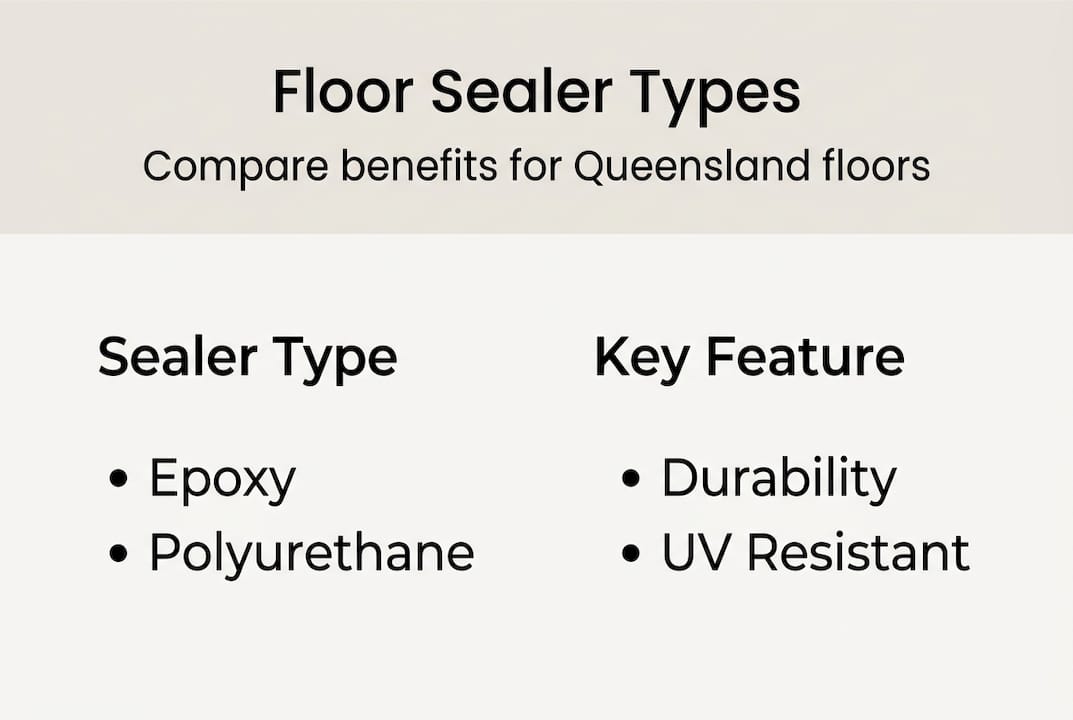
| Sealer type | Lifespan | UV resistance | Best use | Relative cost |
|---|---|---|---|---|
| Epoxy | 5 to 10 years | Low (indoors only) | Garages, warehouses | Moderate |
| Polyurethane | 10 to 20 years | High | Retail, outdoor, high-traffic | Higher |
| Penetrating sealer | 5 to 15 years | High | Outdoor, exposed concrete | Moderate |
| Topical acrylic | 2 to 5 years | Moderate | Decorative, low-traffic areas | Low |
| Water-based hybrid | 8 to 15 years | High | Queensland general use | Moderate to high |
As detailed in epoxy vs polyurethane comparisons, epoxy offers 5 to 10 years of hard-wearing indoor performance at a cost-effective price point, while polyurethane delivers 10 to 20 years with superior UV and impact resistance, though at a higher cost. Penetrating sealers soak into the concrete matrix rather than forming a surface film, making them ideal for outdoor areas exposed to UV and rain.
Key considerations for Queensland conditions:
- Epoxy: Excellent for indoor garages, workshops, and warehouses. Not suitable for outdoor use due to UV yellowing. Pairs well with flake epoxy finishes for decorative appeal
- Polyurethane: Best for retail showrooms, commercial kitchens, and outdoor-adjacent areas. Resists UV degradation and chemical spills
- Penetrating sealers: Ideal for driveways, patios, and pool surrounds. Invisible finish with no surface film to peel or flake
- Topical acrylics: Suitable for decorative residential applications with low foot traffic. Require more frequent recoating
- Water-based hybrids: The preferred choice for Queensland’s humidity. Lower VOC emissions, faster cure times, and strong UV resistance. Technical data on water-based sealers confirms their suitability for both interior and exterior Queensland applications
Pro Tip: For most Queensland residential and light commercial projects, a water-based polyurethane or epoxy hybrid delivers the best balance of UV resistance, humidity tolerance, and longevity. Solvent-based products may perform well initially but can become brittle under prolonged UV exposure.
How floor sealing works: from surface to long-lasting performance
Once you know your options, seeing how the sealing process works helps you choose wisely and avoid common missteps. The quality of the outcome depends far more on preparation than on the product itself.
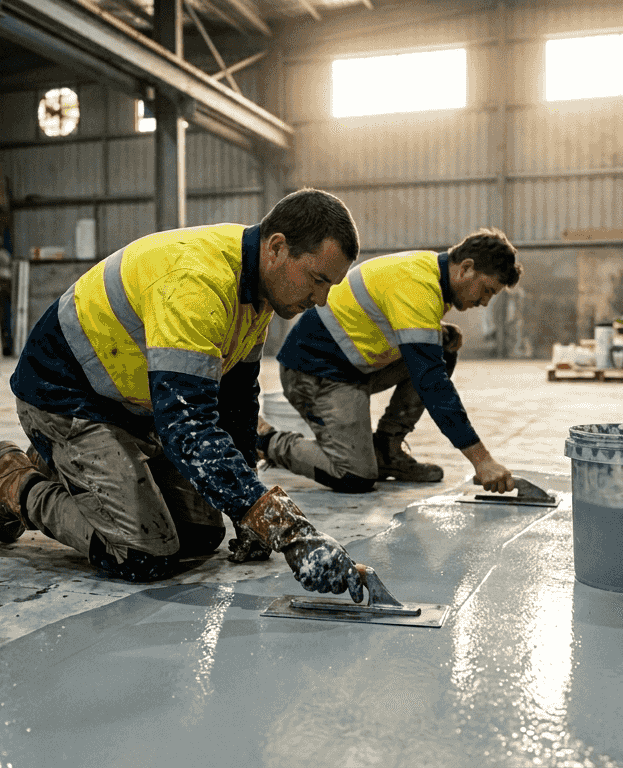
Here is how a professional sealing project unfolds:
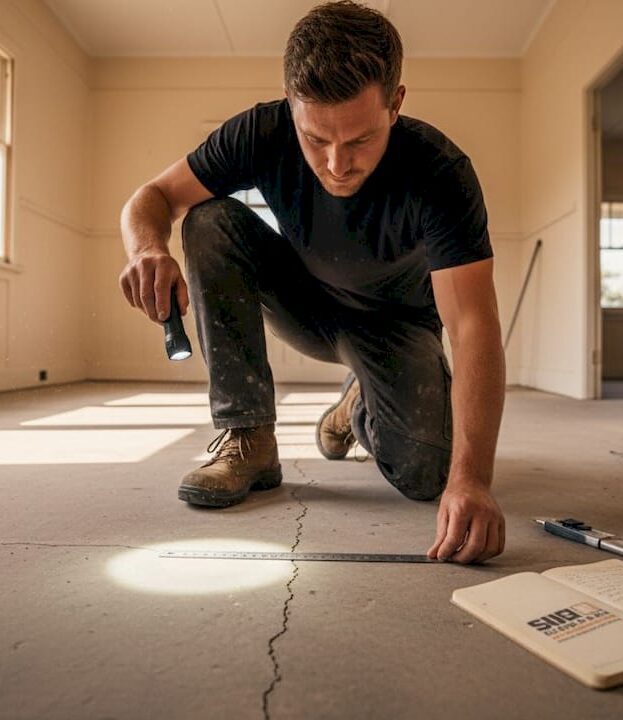
- Surface assessment: We test concrete moisture content, hardness (MPa), and existing contamination. Moisture readings above acceptable thresholds mean sealing must wait
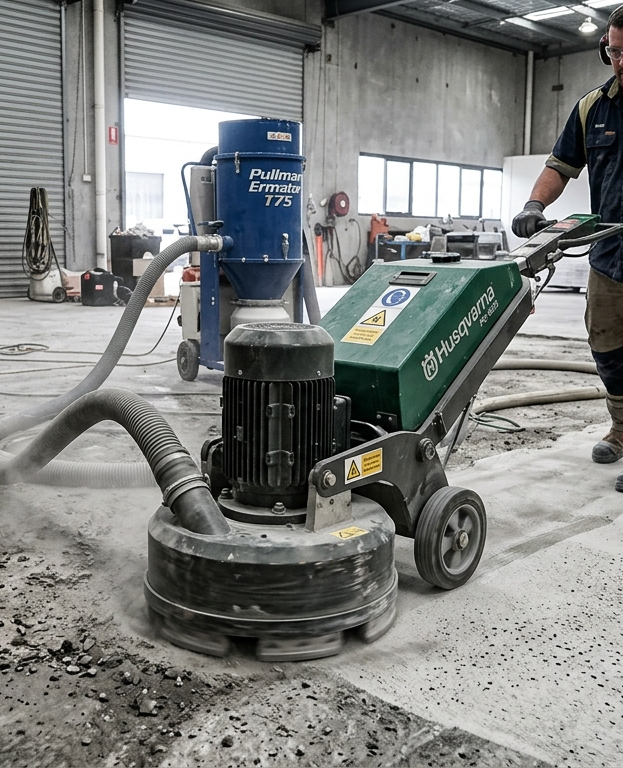
- Mechanical preparation: Diamond grinding or shot blasting removes laitance, old coatings, and surface contaminants. This creates a Concrete Surface Profile (CSP) that allows the sealer to bond correctly
- Crack and joint repair: Existing cracks are filled with flexible or rigid compounds depending on whether movement is expected
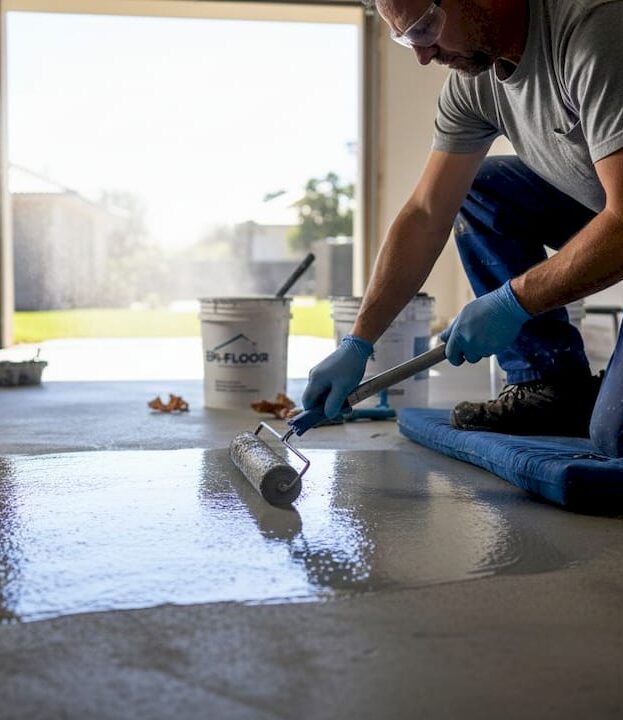
- Priming: A penetrating primer is applied to seal the substrate and improve adhesion for the topcoat
- Sealer application: Applied in controlled conditions, typically between 10°C and 30°C with low humidity. Multiple coats are applied with adequate cure time between each
- Final inspection: Surface is checked for pinholes, bubbles, or uneven coverage before sign-off
Common pitfalls include sealing over damp concrete, applying in direct sunlight during Queensland summers, and skipping the primer coat to save time. Weather and epoxy performance are closely linked, and ignoring temperature and humidity at application time is a leading cause of failure.
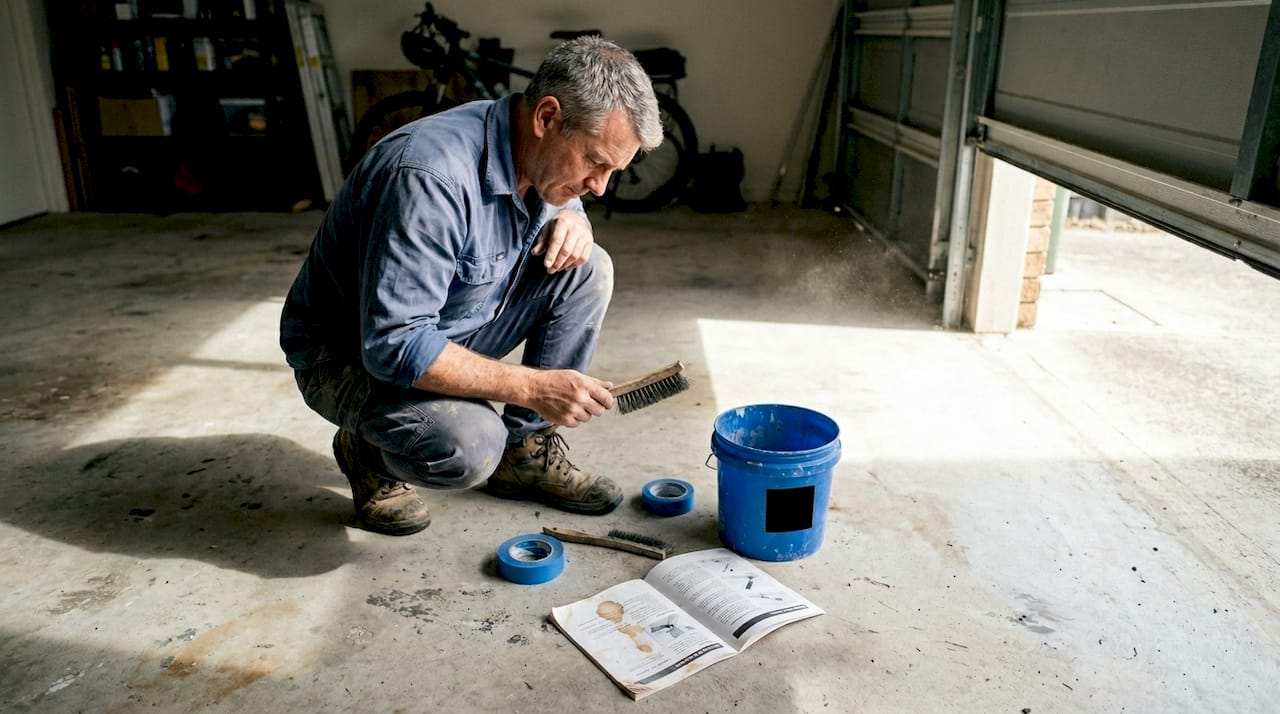
As professional application standards confirm, up to 80% of failures are caused by poor preparation and application conditions, not the product selected. This is a critical insight. You can spend more on a premium sealer and still get a poor result if the substrate is not properly prepared.
Pro Tip: Never seal new concrete before it has cured for at least 28 days. Fresh concrete contains residual moisture that will trap vapour under the coating, causing bubbling and delamination. For garage floor sealing, always test moisture levels before committing to a product. Refer to sealer application guidelines for specific substrate requirements.
Choosing and maintaining your floor sealer for Queensland conditions
Armed with process knowledge, you are ready to select and maintain the perfect sealer for your space. The right choice depends on your setting, traffic levels, and exposure conditions.
| Setting | Recommended sealer | Key benefit |
|---|---|---|
| Residential garage | Epoxy or water-based hybrid | Chemical and tyre stain resistance |
| Retail showroom | Polyurethane | UV stability, high gloss, easy cleaning |
| Warehouse or factory | Industrial epoxy | Heavy load tolerance, durability |
| Outdoor patio or driveway | Penetrating sealer | UV resistance, no surface film to peel |
| Commercial kitchen | Polyurethane or epoxy | Chemical resistance, hygiene compliance |
For industrial floor maintenance, the selection criteria extend to chemical resistance ratings and load-bearing capacity. When choosing epoxy coatings for commercial use, always confirm the product’s compressive strength and slip resistance classification.
Maintenance practices that extend sealer life:
- Regular cleaning: Use pH-neutral cleaners. Avoid acidic or solvent-based products that degrade the sealer surface
- Prompt spill response: Clean chemical spills immediately, especially oils, fuels, and acids
- Periodic inspection: Check for UV discolouration, surface chalking, or delamination annually
- Recoating schedule: Most sealers benefit from a maintenance coat every 3 to 5 years depending on traffic
- Avoid abrasive tools: Steel wool or harsh scrubbing pads scratch the sealer surface and reduce its protective capacity
On sustainability, lifecycle cost analysis confirms that regular resealing doubles lifespan compared to neglected floors, reducing the need for full resurfacing. For projects where environmental impact is a priority, dry shake toppings lower lifetime CO2 significantly compared to repeated epoxy recoating cycles.
Pro Tip: Always evaluate the total cost of ownership, not just the upfront price. A cheaper sealer that needs replacing every two years costs more over a decade than a premium system applied correctly once and maintained on schedule.
What most guides miss about floor sealing in Queensland
Most articles on floor sealing focus on product types and application steps. What they rarely address is the mindset that leads to poor outcomes, and we see it regularly on Queensland projects.
The most common mistake is treating sealing as a one-time event. Clients select a product, have it applied, and assume the job is done indefinitely. Queensland’s UV intensity and humidity mean that even the best sealers require periodic attention. A ‘set and forget’ approach leads to gradual degradation that goes unnoticed until the damage is expensive to fix.
Another overlooked factor is the false economy of skipping professional preparation. We have assessed floors where DIY or budget applications failed within 18 months because the substrate was not properly profiled or dried. The cost of stripping and reapplying always exceeds the savings made upfront.
The most successful Queensland projects we work on share one characteristic: the client asks about maintenance schedules and reapplication timelines before committing to a system, not just about colour or gloss level. If you are styling floors with epoxy for a showroom or retail space, the aesthetic result matters, but the maintenance plan is what protects that investment over time. Durability and appearance are not competing priorities. With the right system and regular care, you achieve both.
How to achieve outstanding results with professional floor sealing
Ready to safeguard your floors and boost your space’s visual impact? Here is how expert help makes all the difference.
At FloorX Industries, we deliver end-to-end floor sealing solutions for residential, commercial, and industrial clients across Queensland. From surface preparation and grinding through to epoxy floor coatings and concrete polishing solutions, every project is handled with precision and backed by over a decade of local experience.
We understand Queensland’s climate demands and tailor every system to your specific setting, whether that is a Gold Coast garage, a Brisbane retail showroom, or a regional warehouse. Our team uses industrial-grade materials, professional preparation equipment, and proven application techniques to deliver floors that perform and look outstanding for years. Contact our floor sealing specialists today for a tailored quote and expert advice on the right system for your space.
Frequently asked questions
How long does professionally sealed flooring last in Queensland?
With correct materials and maintenance, epoxy lasts 5 to 10 years and polyurethane 10 to 20 years, even under Queensland’s demanding conditions.
Can I seal my floors myself or should I always use professionals?
DIY is possible for small, low-traffic areas, but professional preparation and application prevent up to 80% of sealing failures that stem from poor substrate prep and incorrect application conditions.
What is the most sustainable sealing method for concrete floors?
Dry shake toppings lower CO2 over the full lifecycle of the floor compared to repeated epoxy recoating, making them the preferred choice for sustainability-focused projects.
Does Queensland’s weather affect floor sealer choice?
Yes, high UV and humidity demand water-based polyurethane or epoxy hybrids with UV-resistant topcoats, particularly for outdoor and high-moisture areas across Queensland.