

TL;DR:
- Polished concrete is a versatile, long-lasting flooring option suitable for homes and commercial spaces.
- Proper preparation and multi-stage grinding process are essential for achieving a high-quality, durable finish.
- Routine maintenance with sweeping and resealing ensures polished concrete remains attractive and functional for decades.
Many Queensland property owners still picture polished concrete as something reserved for cold, grey warehouses. That assumption is costing them one of the most versatile and cost-effective flooring options available today. Polished concrete has firmly established itself in modern homes, retail showrooms, restaurants, and commercial offices across Queensland, offering a surface that is as beautiful as it is practical. This guide walks you through exactly how polished concrete works, why it outperforms most alternatives, where to use it, and how to keep it looking exceptional for decades.
Table of Contents
- What is polished concrete and how does it work?
- Why choose polished concrete for Queensland homes and properties?
- Comparing polished concrete to alternative flooring options
- Where and how to use polished concrete in Queensland spaces
- Caring for and maintaining polished concrete floors
- What most people miss about polished concrete
- Take the next step to beautiful, lasting floors
- Frequently asked questions
Key Takeaways
| Point | Details |
|---|---|
| Lasts for decades | Polished concrete can outlast most flooring options with minimal maintenance required. |
| Suits most Queensland spaces | Ideal for homes and commercial areas with versatile finishes for indoors or outdoors. |
| Cost-effective choice | Lower long-term costs compared to tiles or timber make polished concrete a smart investment. |
| Requires expert installation | Proper mechanical polishing and experienced tradespeople prevent poor finishes and ensure quality. |
What is polished concrete and how does it work?
Polished concrete is a mechanically refined surface created by grinding down an existing or new concrete slab using progressively finer diamond-tipped tooling. Unlike a painted or coated floor, the finish lives within the concrete itself. The result is a dense, hard-wearing surface with a reflective sheen that can range from a subtle matte to a mirror-like high-gloss.
Understanding the concrete polishing process helps you set realistic expectations before work begins. The multi-stage MPC process involves the following key steps:
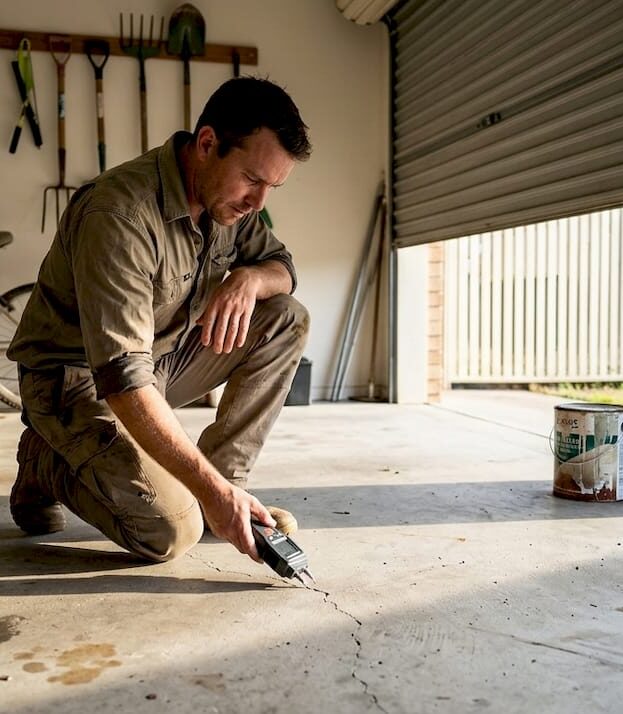
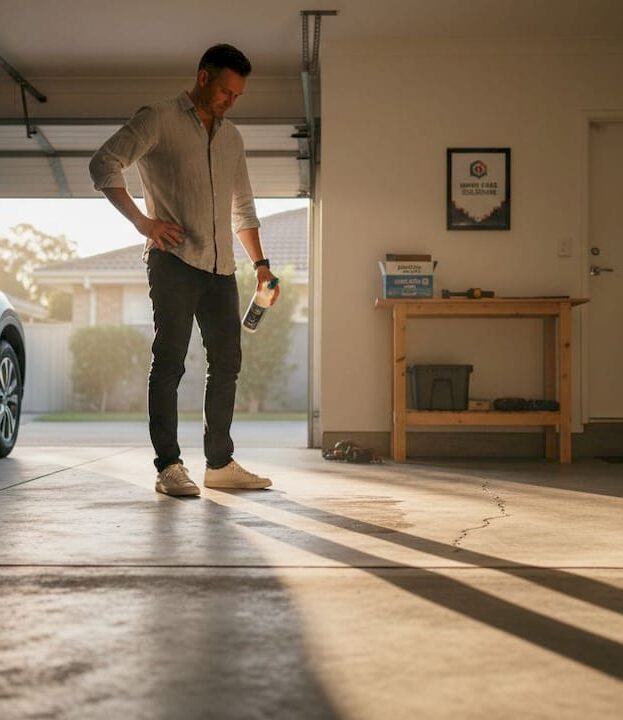
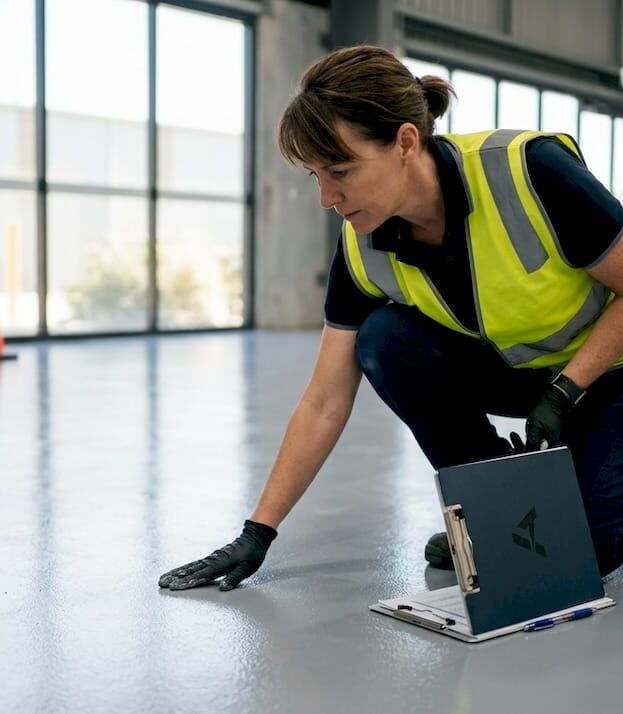
- Surface preparation: The slab is inspected, cleaned, and any cracks or surface contaminants are addressed. This stage determines the quality of everything that follows.
- Coarse grinding: Industrial-grade diamond tooling removes the top layer of concrete, exposing the aggregate beneath and flattening any high spots.
- Grouting: Surface pores and minor imperfections are filled with a cementitious grout to create a uniform base.
- Densifying: A chemical densifier, typically a lithium or sodium silicate solution, is applied and absorbed into the slab. It reacts with the calcium hydroxide in the concrete to form calcium silicate hydrate, which fills microscopic pores and dramatically hardens the surface.
- Fine polishing: Progressively finer grits (from around 100 grit up to 800, 1500, or 3000 grit) refine the surface to the desired sheen level.
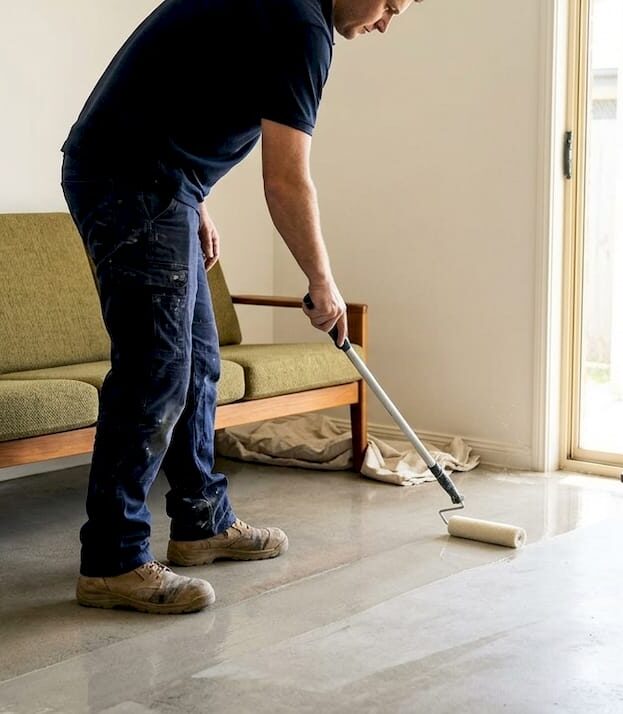
- Sealing: A penetrating or topical sealer is applied to protect against staining and moisture ingress.
Gloss levels are typically described as matte (up to 400 grit), satin (800 grit), and high-gloss (1500 to 3000 grit). Each level suits different spaces and design preferences.
Pro Tip: Skipping grits to save time is the most common cause of visible swirl marks and uneven sheen. Each grit level removes the scratches left by the previous one. Rush that sequence and the flaws become permanent.
Why choose polished concrete for Queensland homes and properties?
With the polishing process demystified, it’s time to look at the compelling reasons so many Queensland property owners are choosing polished concrete.
Polished concrete delivers a combination of practical and aesthetic advantages that few other flooring types can match. Poor finishes reveal exactly how unforgiving the surface is when rushed, but a properly executed floor rewards you with decades of reliable performance and minimal upkeep.
“A well-polished concrete floor reflects light, resists wear, and requires almost no ongoing maintenance. The quality of the finish is immediately visible to anyone who knows what to look for.”
Here are the core benefits for Queensland properties:
- Longevity: Polished concrete floors routinely last 20 to 30 years or more without needing replacement. That lifespan far exceeds carpet, vinyl, and most timber options.
- Low maintenance: No grout lines to scrub, no wax to strip, and no seams to lift. A regular sweep and occasional damp mop is all that’s required for day-to-day care.
- Reflective surface: The high-gloss finish bounces natural and artificial light around a room, reducing the need for additional lighting in commercial and retail settings.
- Thermal mass: In Queensland’s climate, polished concrete absorbs heat during the day and releases it slowly at night, contributing to passive cooling and reduced energy costs.
- Aesthetic versatility: Aggregate exposure levels, dyes, and sheen choices mean polished concrete suits everything from a minimalist coastal home to an industrial-style café.
- Property value: The lasting value of polished concrete is well recognised by buyers and commercial tenants who understand the low lifecycle cost.
For warehouse and commercial operators, polished concrete for warehouses also reduces dust generation, which matters for product quality and workplace health standards.
Comparing polished concrete to alternative flooring options
Understanding the benefits is only half the story. To make a smart decision, see how polished concrete really stacks up against other common floors.
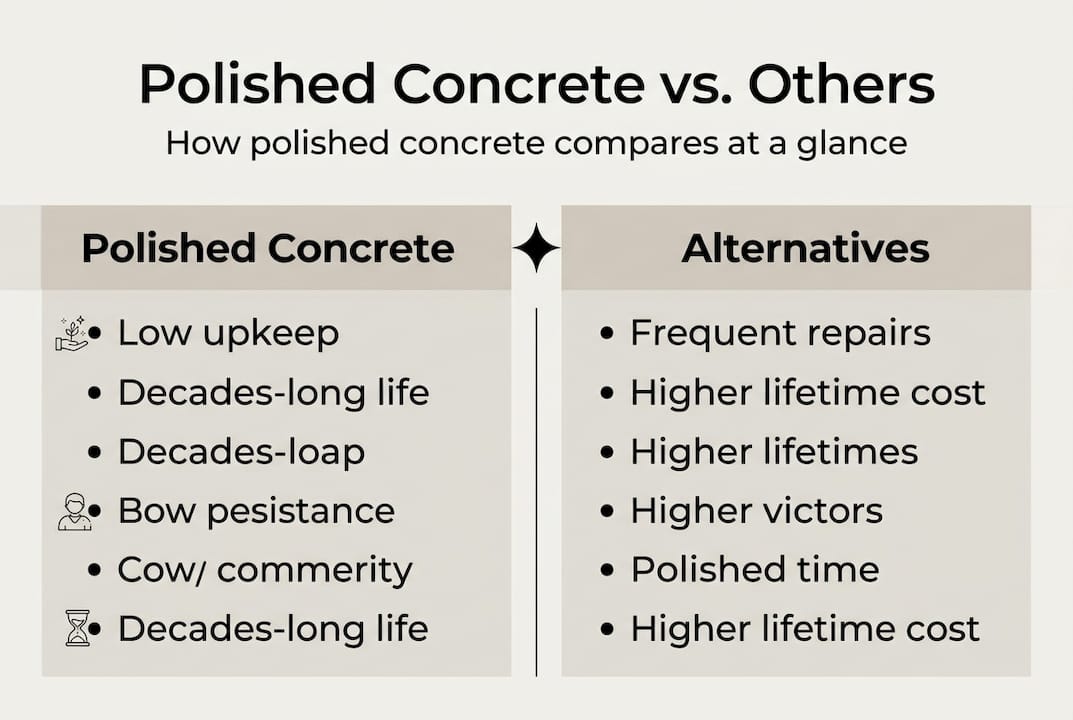
The flooring cost and durability comparison across material types shows polished concrete consistently winning on lifecycle cost. Lower cost over decades compared to tiles or timber is one of its most compelling practical advantages.
| Flooring type | Lifespan | Maintenance | Moisture resistance | Avg. lifecycle cost |
|---|---|---|---|---|
| Polished concrete | 20 to 30+ years | Very low | High | Low |
| Ceramic tiles | 10 to 20 years | Medium | Medium | Medium |
| Timber | 10 to 25 years | High | Low | High |
| Epoxy coating | 5 to 15 years | Low | High | Low to medium |
| Vinyl plank | 5 to 15 years | Low | Medium | Medium |
Key comparisons to keep in mind:
- Versus tiles: Tiles crack under point loads and grout lines harbour bacteria and dirt. Polished concrete has no joints and resists impact better in high-traffic areas.
- Versus timber: Timber is vulnerable to moisture, swelling, and scratching. In Queensland’s humid climate, timber floors often require costly refinishing every five to seven years.
- Versus epoxy: Epoxy coatings sit on top of the slab and can peel or yellow with UV exposure over time. Polished concrete has no coating to fail because the finish is integral to the slab itself.
Exploring the full range of concrete coatings options can help you decide whether a polished or coated finish better suits your specific space and budget.
Where and how to use polished concrete in Queensland spaces
Having explored the pros and cons, it’s crucial to know exactly where and how polished concrete delivers the best results for your space.
Polished concrete performs best in indoor environments where it can be maintained at the correct gloss level without weathering. For outdoor applications, a honed finish is the more appropriate choice. Brisbane residential driveways, for example, require a 125mm N25 slab with a honed finish recommended for outdoor and pool surrounds, while mechanical polishing is best reserved for indoor slabs.
| Application | Recommended finish | Min. slab thickness | Key consideration |
|---|---|---|---|
| Living room / bedroom | High-gloss polish | 100mm | Aggregate exposure choice |
| Kitchen | Satin polish | 100mm | Stain-resistant sealer essential |
| Garage | Grind and seal or epoxy | 100mm | Oil resistance |
| Patio / outdoor | Honed concrete | 100mm to 125mm | Slip resistance rating |
| Driveway | Honed concrete | 125mm N25 | Council permit required |
| Retail / commercial | Satin to high-gloss | 120mm | Foot traffic durability |
| Warehouse | Grind and seal | 150mm+ | Forklift and load rating |
Follow these steps when planning your project:
- Assess the slab condition and confirm thickness with a professional before committing to a finish type.
- Check your local council requirements for driveways or outdoor areas, particularly in Brisbane and the Gold Coast.
- Choose honed concrete for outdoors and reserve mechanical polishing indoors for the best long-term result.
- Confirm the aggregate exposure level you prefer before grinding begins, as this cannot be changed once the coarse grind is complete.
Pro Tip: Patchy colour or uneven aggregate exposure almost always traces back to inconsistent slab moisture content at the time of polishing. Allow new slabs to cure fully (at least 28 days) before any grinding begins.
Caring for and maintaining polished concrete floors
Proper application brings beautiful results, but it’s routine maintenance that ensures lasting value and looks. Here’s what you need to know.
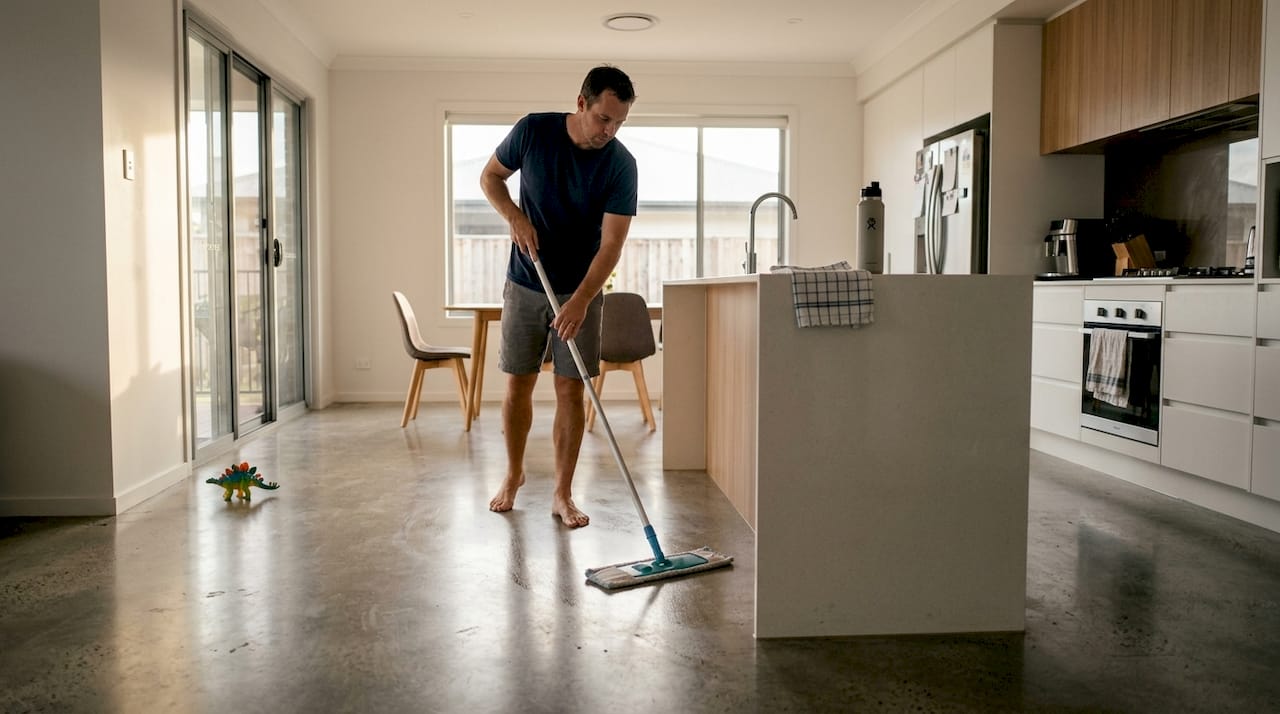
The good news is that polished concrete longevity is genuinely supported by simple, consistent care rather than expensive products or specialist contractors. Maintaining polished concrete correctly will keep your floor performing and looking its best for decades.
Follow this maintenance routine:
- Daily or weekly sweeping: Use a microfibre dust mop to remove grit and fine particles. Sand and grit act like sandpaper underfoot and will dull the surface over time if left.
- Damp mopping: Use a pH-neutral cleaner diluted in water. Avoid acidic cleaners (like vinegar) or alkaline degreasers, which can etch the surface or break down the sealer.
- Spill response: Wipe up spills promptly. Polished concrete is resistant to staining but not impervious, particularly to oils, red wine, and acidic liquids if left to sit.
- Periodic resealing: Depending on traffic levels, the sealing process should be revisited every two to five years for residential floors, or annually in high-traffic commercial settings.
- Repair of chips or cracks: Address any damage early. Small chips can be filled with matching cementitious grout; larger structural cracks need professional assessment.
Do:
- Use felt pads under furniture legs
- Place entrance mats at doorways to trap grit
- Reseal on schedule to maintain stain resistance
Don’t:
- Use steel wool, abrasive scrubbers, or harsh chemical cleaners
- Allow standing water near expansion joints
- Drag heavy furniture or equipment across the surface without protection
What most people miss about polished concrete
After learning how to look after your floors, consider a few truths most publications gloss over. Here’s what experience really teaches.
The biggest misconception we encounter is that polished concrete is a set-and-forget solution. It is low maintenance, but it is not zero maintenance. The floors that look stunning after ten years are the ones where the owner followed a consistent care routine from day one.
The second issue is contractor quality. Swirl marks and patchiness from rushed grit sequences are almost impossible to fix without re-grinding the entire floor. Choosing a contractor based on price alone is a costly mistake we see regularly across Queensland.
What we’ve genuinely learned after years in this industry is that the prep stage matters more than any other. A poorly prepared slab will produce a poor result regardless of how good the polishing equipment is. Invest in thorough surface assessment, proper crack repair, and correct moisture testing before any diamond hits the floor. Follow the polishing pitfalls guide and you’ll avoid the most expensive mistakes before they happen.
Take the next step to beautiful, lasting floors
Ready to put these insights into action? At FloorX Industries, we specialise in transforming concrete slabs into high-performance, visually striking surfaces for homes and businesses across Queensland.

Our concrete polishing service covers everything from surface assessment and preparation through to final sealing, using industrial-grade equipment and techniques compliant with Australian standards. Whether you’re after a high-gloss living room floor, a durable retail surface, or a honed finish for outdoor spaces, we tailor every project to your space and budget. Explore the lasting value for your floors and get in touch with our team today for an obligation-free assessment.
Frequently asked questions
Is polished concrete slippery or safe for homes?
Properly installed polished concrete can meet Australian slip resistance standards, and honed finishes are recommended for outdoor or wet areas where a coarser texture improves grip underfoot.
How long does polished concrete last compared to tiles or timber?
Polished floors last decades with minimal maintenance, often outlasting tiles or timber which typically require replacement or refinishing well within that timeframe.
Can existing concrete be polished or does it need to be new?
Most structurally sound existing slabs can be polished, though the slab assessment and preparation stage will identify any cracks or damage that need addressing before grinding begins.
How do I maintain the shine and condition of polished concrete?
Regular sweeping with a microfibre mop, occasional damp mopping with a pH-neutral cleaner, and periodic resealing every two to five years will keep polished concrete looking its best for the long term.