

TL;DR:
- Proper assessment and preparation are crucial to ensure successful concrete floor refurbishment.
- Three main methods include resurfacing, grind and seal, and polishing, each suited to different needs.
- Queensland’s climate demands UV-stable products and professional expertise for durable, aesthetically pleasing floors.
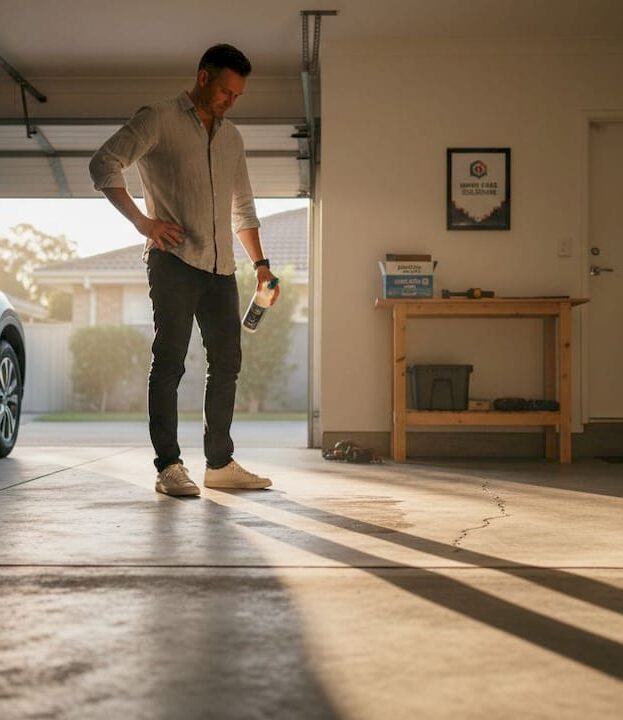
Cracked, stained, or dull concrete floors are more than an eyesore. In Queensland homes, they can signal deeper structural wear accelerated by the state’s intense UV exposure, high humidity, and seasonal temperature swings. Whether it’s your garage slab, outdoor patio, or interior living area, a worn concrete floor chips away at your property’s value and kerb appeal. The good news is that refurbishing your concrete floor is a proven, cost-effective way to restore both function and aesthetics without the expense of full replacement. This guide walks you through every key stage, from initial assessment through to choosing the right finish, so you can approach your project with confidence.
Table of Contents
- Assessing your concrete floor: The vital first step
- Essential site preparation: Cleaning, repairing, and priming for success
- Key refurbishing methods: Resurfacing, grind and seal, and polishing
- Costs, durability, and expected results: What Queensland homeowners can anticipate
- An expert’s take: Why most Queensland concrete floor refurbs fail (and how to get it right)
- Upgrade your concrete floor with Queensland’s refinishing specialists
- Frequently asked questions
Key Takeaways
| Point | Details |
|---|---|
| Assessment is critical | Properly inspecting your existing floor determines the right refurbishing technique and prevents failures. |
| Preparation ensures durability | Thorough cleaning and crack repair are essential for long-lasting, attractive results. |
| Choose the right method | Match refurbishing approaches—like resurfacing or polishing—to your floor’s use and desired look. |
| Consider QLD conditions | Select UV-stable and climate-appropriate products for the best results in Queensland. |
| Professional results last longer | Qualified installers deliver finishes that last decades and increase your home’s value. |
Assessing your concrete floor: The vital first step
Before you commit to any refurbishing method, you need an honest picture of your floor’s current condition. Skipping this step is one of the most common reasons projects fail. A thorough assessment tells you which repairs are needed, which methods are suitable, and whether professional intervention is required.
Queensland’s climate puts concrete under unique stress. Prolonged UV exposure degrades surface sealers, while high humidity encourages moisture ingress that weakens the slab from within. Seasonal flooding or heavy rainfall can cause sub-base movement, leading to cracking and spalling (surface flaking). These factors mean a QLD slab can deteriorate faster than one in a cooler, drier climate.
Common floor issues to look for:
- Cracks wider than 2mm (structural or shrinkage)
- Spalling or surface pitting
- Oil, grease, or chemical stains
- Existing coatings that are peeling or delaminating
- Efflorescence (white salt deposits) indicating moisture movement
- Uneven or sunken sections
For homeowners interested in upgrading to decorative flooring types, understanding your slab’s baseline condition is essential before selecting a finish.
Basic slab inspection tools:
| Tool | Purpose |
|---|---|
| Crack gauge or ruler | Measure crack width and depth |
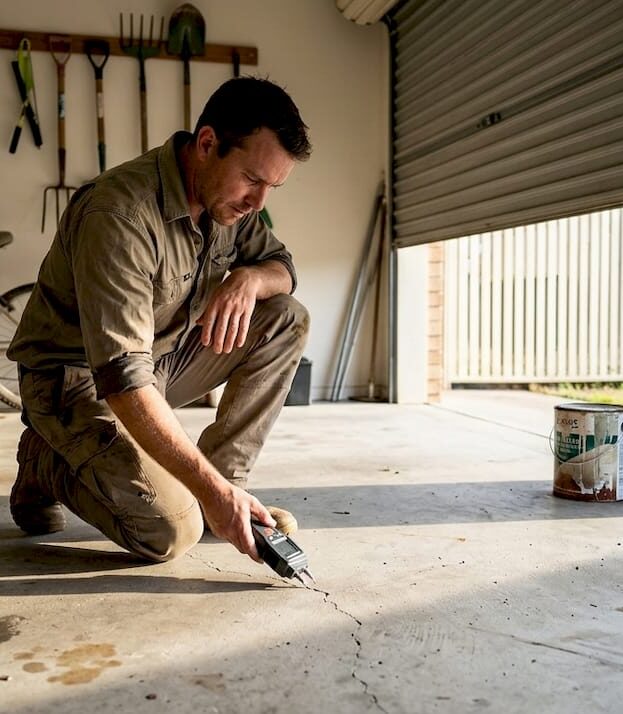
| Moisture meter | Detect sub-surface moisture levels |
| Screwdriver or awl | Test for soft or hollow spots |
| Torch and camera | Document defects clearly |
| Straight edge (1.8m) | Identify surface unevenness |
If you find cracks wider than 2mm, active moisture, or large delaminated areas, call in a professional. Minor surface staining and hairline cracks are manageable with DIY preparation, but structural issues require expert repair before any coating is applied. Proper maintaining concrete flooring starts with knowing exactly what you’re working with.
As surface preparation experts confirm, preparation is critical and includes high-pressure cleaning, repairing cracks wider than 2mm, and removing old coatings before any resurfacing work begins.
Pro Tip: Photograph every defect before work starts. This gives you a clear before-and-after record and helps any professional you engage understand the scope of repairs needed.
Essential site preparation: Cleaning, repairing, and priming for success
Once you’ve assessed your floor, it’s time to move on to thorough preparation. This is the make-or-break phase of any refurbishing project. No matter how good your chosen coating or finish is, it will fail if applied to a poorly prepared surface.
Step-by-step site preparation process:
- High-pressure wash the entire surface. Queensland soils, red clay in particular, can embed deeply into concrete pores. Use a pressure washer at 3,000 PSI or higher to remove dirt, biological growth, and loose material. Allow 24 to 48 hours drying time.
- Repair cracks wider than 2mm. Use an epoxy injection system or a polymer-modified filler for structural cracks. For surface cracks, a flexible polyurethane sealant maintains crack-bridging ability under thermal movement.
- Remove old sealers and coatings. Mechanical grinding, shot blasting, or scarifying strips existing coatings that would otherwise prevent adhesion. Never apply a new coating over a failing old one.
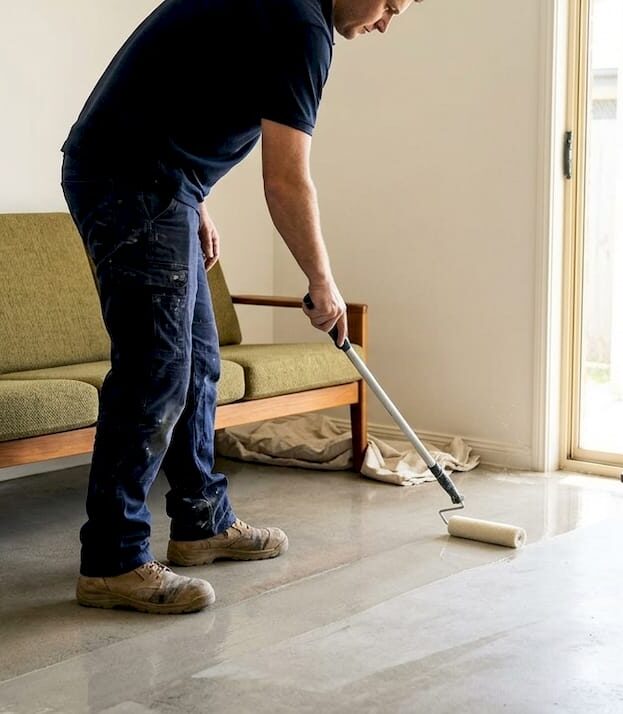
- Apply a bonding primer or adhesion promoter. This step is critical for overlays and epoxy coatings. The primer penetrates the slab and creates a chemical bond between the concrete and the new coating.
- Allow full cure time before proceeding. Moisture in the slab is the enemy of adhesion. Confirm moisture levels are within the coating manufacturer’s specified range before moving forward.
“Preparation is critical and includes using UV-stable sealers and crack-bridging products suited to Queensland’s climate. Skipping any step significantly increases the risk of coating failure.”
Acid washing is sometimes used to etch concrete surfaces and open the pores for better adhesion. However, it produces hazardous fumes and requires full personal protective equipment including respirator, eye protection, and chemical-resistant gloves. Always work in a well-ventilated area and neutralise the acid thoroughly before rinsing.
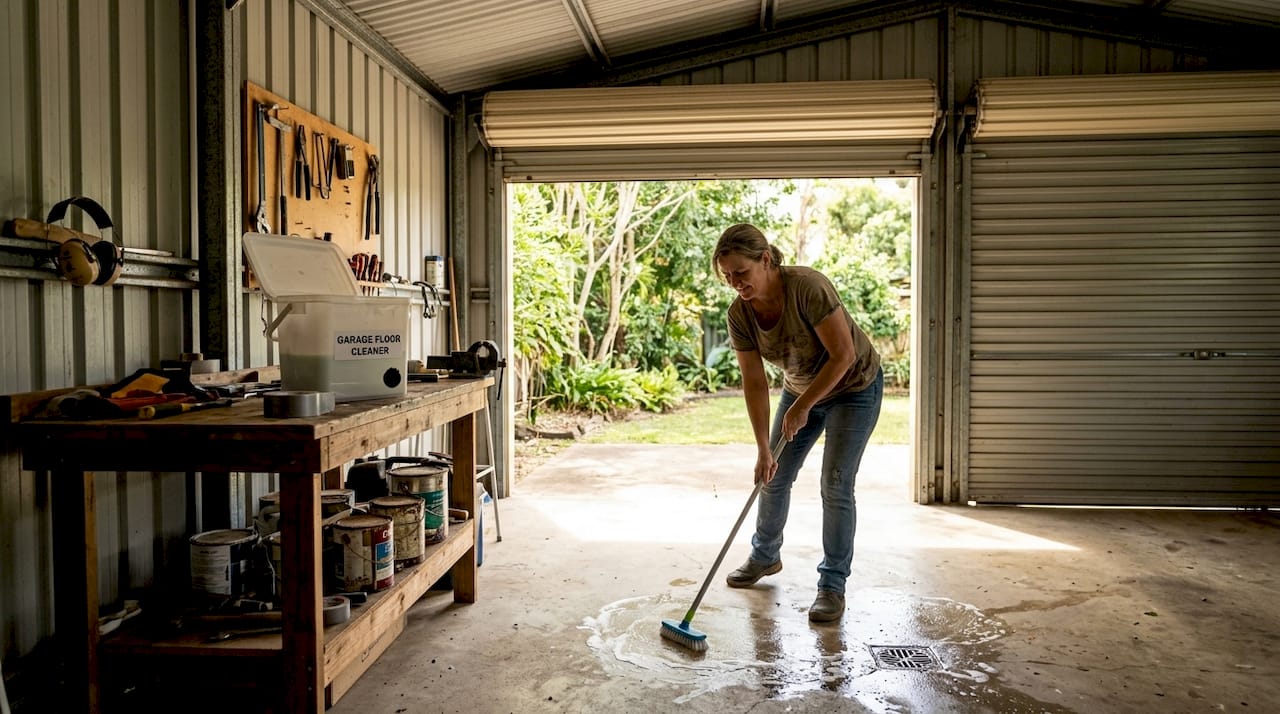
For homes in high-UV or coastal areas, epoxy performance in QLD weather is directly tied to how well the surface was prepared. Similarly, quality sealing concrete floors depends entirely on a clean, dry, and properly profiled substrate.
Pro Tip: Always allow the surface to dry completely before applying any primer or coating. In Queensland’s humid conditions, this may take longer than the manufacturer’s standard recommendation. Use a moisture meter to confirm readings are below 75% relative humidity at the surface.
Key refurbishing methods: Resurfacing, grind and seal, and polishing
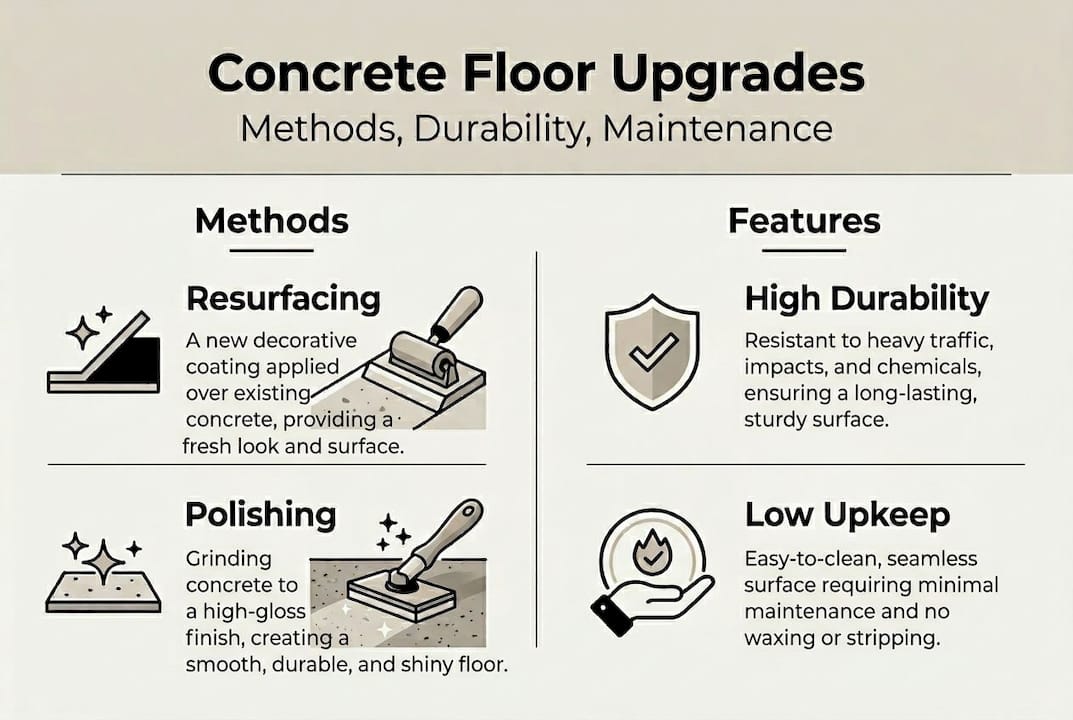
With the surface properly prepared, you’re ready to choose and apply your ideal refurbishing method. Three proven approaches suit most Queensland residential applications, each with distinct advantages depending on your floor’s condition, your budget, and your aesthetic goals.
Method 1: Concrete resurfacing (overlays)
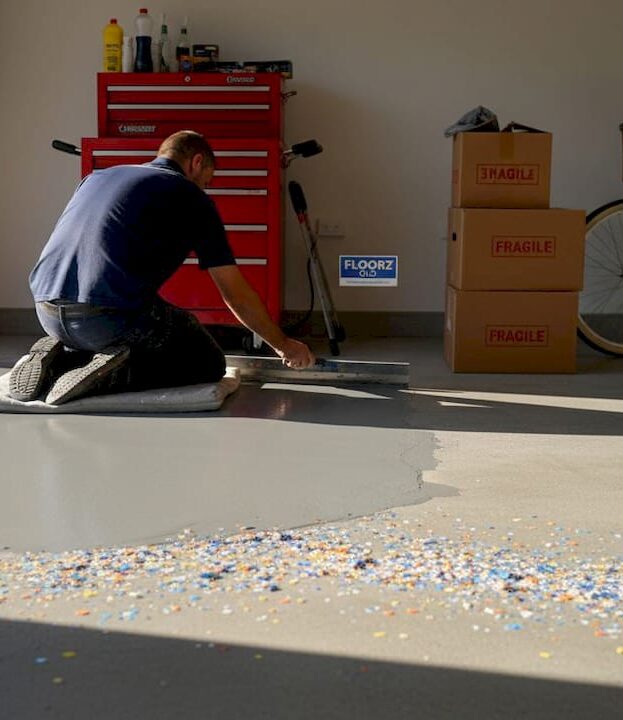
- Apply a polymer-modified overlay product at 3 to 6mm thickness.
- Spread evenly using a gauge rake and smooth with a squeegee.
- Stamp, stencil, or texture the surface while wet for decorative effects.
- Seal with a UV-stable topcoat once cured.
Best for: Driveways, patios, and pool surrounds where decorative appeal is the priority. Suits slabs with moderate surface damage.
Method 2: Grind and seal
- Grind the surface using diamond-tipped tooling to remove the laitance (weak top layer) and expose aggregate.
- Fill any remaining surface voids.
- Apply a penetrating sealer or surface coating in the desired sheen level.
Best for: Outdoor entertaining areas and garages where a natural concrete look is preferred. Concrete coating types in this category offer excellent slip resistance when correctly specified.
Method 3: Mechanical polishing
- Grind progressively through diamond tooling grits (typically 30, 80, 400, 800, 1500, 3000).
- Apply a chemical hardener (densifier) mid-process to increase surface hardness.
- Polish to the desired sheen: matte, satin, or high-gloss.
Best for: Interior living areas, retail spaces, and high-traffic zones. Polished concrete benefits include exceptional durability and low ongoing maintenance.
As mechanical polishing steps confirm, grit progression is critical to achieving a consistent, high-quality finish.
Method comparison:
| Method | Approx. cost/sqm | Durability | Finish options | Maintenance |
|---|---|---|---|---|
| Resurfacing | $30 to $100 | 10 to 15 years | High (stamps, stencils) | Reseal every 3 to 5 years |
| Grind and seal | $25 to $60 | 3 to 7 years per seal | Moderate | Reseal every 3 to 5 years |
| Mechanical polishing | $50 to $130 | 20 to 30+ years | Moderate to high | Low (dust mop, occasional densifier) |
For best results, all three methods require professional-grade equipment and expertise. DIY attempts with inadequate machinery consistently produce uneven finishes and premature coating failure.
Costs, durability, and expected results: What Queensland homeowners can anticipate
Having picked your method, it’s essential to know what to expect in terms of investment, durability, and results.
Refurbishing costs in Queensland range from $30 to $100 per square metre for resurfacing and $50 to $130 per square metre for polished concrete, which is 50 to 70% less than full slab replacement.
Typical cost ranges by area:
| Area | Size (sqm) | Resurfacing estimate | Polishing estimate |
|---|---|---|---|
| Single garage | 18 to 22 | $540 to $2,200 | $900 to $2,860 |
| Patio or alfresco | 20 to 40 | $600 to $4,000 | $1,000 to $5,200 |
| Open-plan interior | 40 to 80 | $1,200 to $8,000 | $2,000 to $10,400 |
Queensland’s heat and UV intensity affect how long finishes last. UV-stable topcoats are non-negotiable for outdoor areas. Interior polished concrete, protected from direct sun, can achieve durability of 20 to 30 years under heavy use. Grind and seal finishes typically need resealing every 3 to 7 years depending on traffic and exposure.
Factors that influence your final cost:
- Total slab area and shape complexity
- Extent of crack repairs and surface damage
- Decorative options chosen (stencils, colour, aggregate exposure)
- Site access for machinery
- Number of coating layers required
- Existing coating removal needs
For ongoing value, refer to our concrete maintenance guidance to protect your investment after the job is complete. A well-maintained refurbished floor not only looks better for longer but also protects the structural integrity of the slab beneath.
An expert’s take: Why most Queensland concrete floor refurbs fail (and how to get it right)
After years of assessing and rectifying failed floor projects across Queensland, we see the same root causes repeatedly. The number one reason coatings peel, crack, or turn dull within months is inadequate preparation. Not the product. Not the method. The preparation.
DIY homeowners often underestimate the importance of surface profiling. Cleaning a floor with a garden hose and applying a hardware store sealer is not preparation. It’s a shortcut that costs more to fix than if the job had been done correctly the first time.
Queensland’s soils and climate demand tailored solutions. A primer that performs well in Melbourne’s cooler conditions may fail in Gold Coast humidity. Ignoring these variables is a professional mistake, let alone a DIY one.
Our strongest advice: invest in a professional site assessment before committing to any product or method. As professional assessment guidance confirms, DIY risks significant failure and a qualified assessment dramatically reduces long-term costs and disappointment. For a practical starting point, our garage floor resurfacing guide outlines exactly what a professional process looks like from start to finish.
Upgrade your concrete floor with Queensland’s refinishing specialists
Knowing the steps is one thing. Executing them with the right equipment, materials, and expertise is another. At FloorX Industries, we bring over a decade of hands-on experience to every concrete floor project across Queensland.

We offer expert assessment, industrial-grade surface preparation, and a full range of finishes tailored to your home’s specific needs and Queensland’s demanding climate. Whether you’re after concrete polishing services for your interior living space, epoxy floor coatings for your garage, or a honed concrete finish for your alfresco area, we have the solution. Contact us today to book your obligation-free consultation and take the first step towards a floor that looks exceptional and lasts.
Frequently asked questions
How long does a refurbished concrete floor last in Queensland?
Resurfaced floors last 10 to 15 years, while polished concrete can last 20 to 30 years or more with proper maintenance and the right sealer for Queensland conditions.
Is refurbishing more cost-effective than replacing concrete?
Yes. Refurbishing costs 50 to 70% less than full slab replacement in Queensland, making it the financially sound choice for most homeowners with a structurally sound slab.
What’s the best method for a decorative driveway?
Resurfacing with overlay coatings is ideal for decorative driveways. As long as the existing slab is sound, overlays deliver excellent decorative results with stamped or stencilled patterns.
How does Queensland’s climate affect floor finishes?
Queensland’s UV intensity and humidity require UV-stable sealers and periodic resealing to maintain performance and appearance, particularly for outdoor areas.
Can I refurbish my concrete floor myself?
DIY risks failure due to inadequate equipment and preparation. A professional site assessment and application are strongly recommended for durable, high-quality results in Queensland.