

Your business floors speak volumes before a single word is exchanged. In Queensland’s competitive commercial landscape, floor coatings have evolved from simple protective layers into strategic branding assets that directly influence customer perception and property valuations. This guide explores how custom floor coatings enable precise brand reinforcement, examines technical performance factors critical to Queensland’s subtropical climate, and reveals the measurable financial returns these surfaces deliver. Whether you manage a retail showroom, warehouse, or commercial facility, understanding the intersection of floor coatings, brand identity, and property value positions you to make informed investment decisions that enhance both immediate appeal and long-term asset worth.
Table of Contents
- Key takeaways
- How floor coatings support brand identity
- Technical performance and durability of floor coatings
- Economic impact of floor coatings on property value and ROI
- Choosing and applying the right floor coatings for your brand
- Enhance your brand with expert floor coatings
- Frequently asked questions
Key Takeaways
| Point | Details |
|---|---|
| Brand reinforcement | Custom epoxy and polyurea floor coatings enable precise brand reinforcement through colour matching embedded logos and decorative patterns that communicate quality at every step. |
| Kerb appeal uplift | Proper floor coatings can contribute to higher perceived property value and kerb appeal, supporting long term asset worth in Queensland commercial spaces. |
| Subtropical resilience | Polyurea coatings are better suited to Queensland’s subtropical climate, offering enhanced durability against heat humidity and weathering. |
| Durability ROI | Choosing the right coating improves durability and return on investment by reducing maintenance needs and strengthening brand impact. |
How floor coatings support brand identity
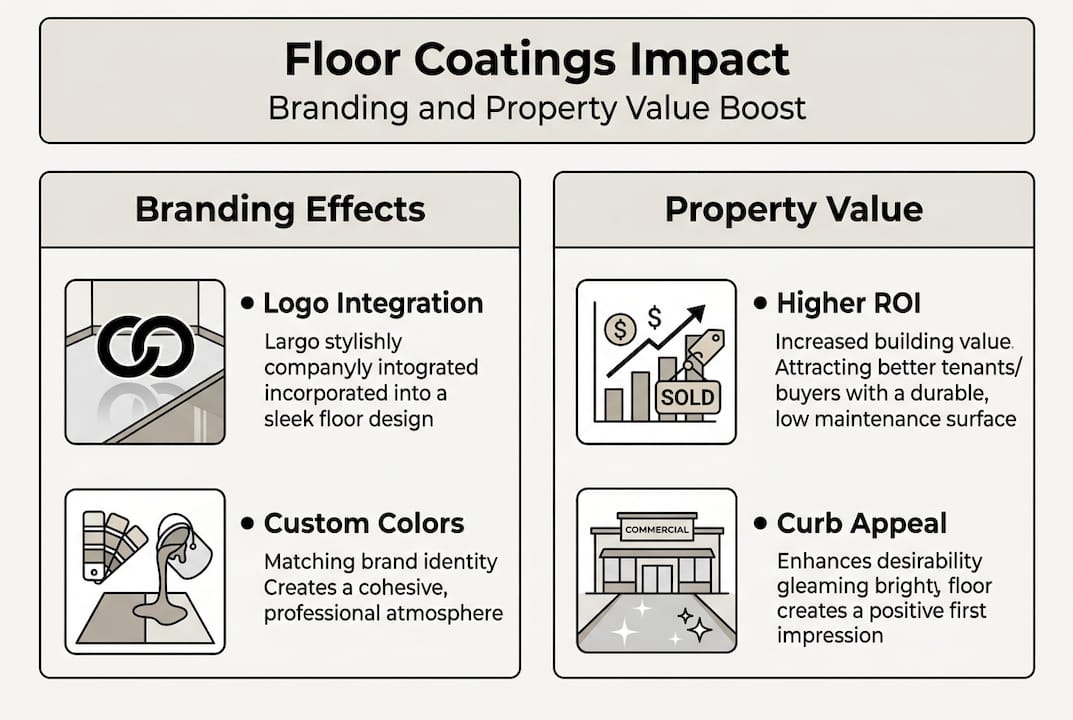
Your floor is the largest uninterrupted canvas in any commercial space, yet most businesses overlook its branding potential. Custom floor coatings transform this overlooked surface into a powerful brand reinforcement tool through precise colour matching, embedded logos, and decorative patterns that create memorable customer experiences. When clients enter your facility, the floor immediately communicates quality standards and attention to detail before they interact with staff or products.
Epoxy floor coatings offer virtually unlimited customisation possibilities. Colour matching to exact Pantone specifications ensures your floor aligns perfectly with brand guidelines, creating visual consistency across all customer touchpoints. Logo embedding through stencil techniques places your brand mark directly underfoot in high-traffic areas, subtly reinforcing recognition with every step. Decorative flake systems in custom colour blends add texture and visual interest whilst hiding minor imperfections, creating a polished appearance that elevates perceived brand value.
The psychological impact of branded floors extends beyond mere aesthetics. Retail environments with cohesive floor branding report increased dwell time as customers feel more comfortable in spaces that demonstrate professional attention to detail. Warehouse facilities with clearly marked zones in brand colours improve operational efficiency whilst reinforcing corporate identity to visiting clients and partners. The floor becomes an extension of your brand story, communicating values like innovation, quality, and professionalism through tangible design choices.
Pro Tip: Incorporate subtle directional patterns or colour gradients in your floor coating design to guide customer flow naturally through your space, enhancing both user experience and strategic product placement without obvious signage.
Beyond visual elements, floor coatings create immersive brand environments that engage multiple senses. Gloss levels can be specified to match brand personality, from high-shine finishes conveying modern sophistication to satin sheens suggesting understated elegance. Texture options range from smooth, seamless surfaces to slip-resistant profiles that prioritise safety without compromising aesthetic appeal. These choices work together to craft a complete sensory experience that reinforces brand positioning at every interaction point.
Having explored branding possibilities, it’s essential to understand the technical performance that ensures these coatings last and add value.
Technical performance and durability of floor coatings
The longevity and effectiveness of branded floor coatings depend entirely on their mechanical properties and application precision. Epoxy provides rigid strength with adhesion strength ranging from 300-500 psi, exceptional chemical resistance to oils, solvents, and cleaning agents, and superior abrasion resistance for high-traffic commercial environments. These properties make epoxy ideal for indoor applications where controlled conditions maintain coating integrity over 10-20 year lifespans.
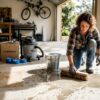
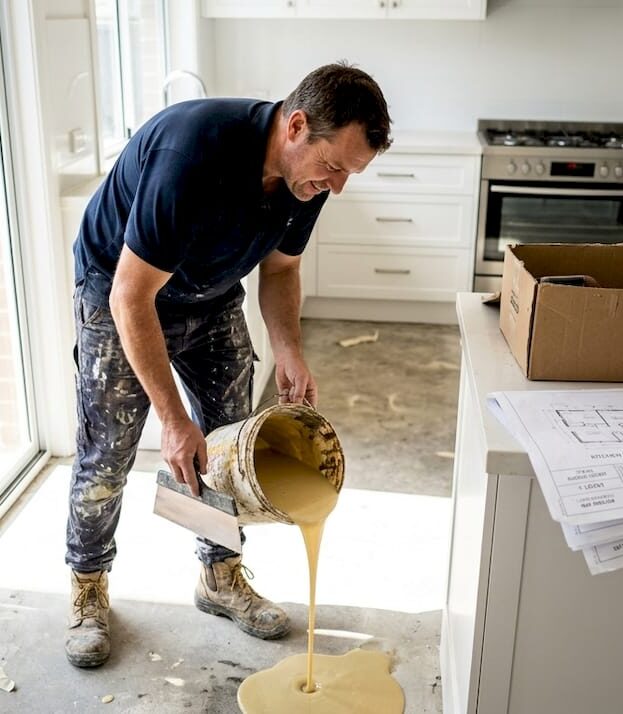
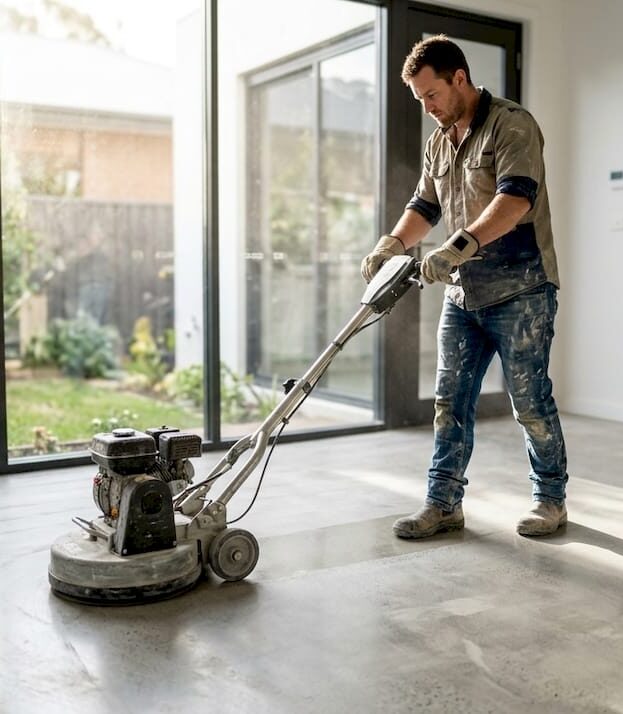
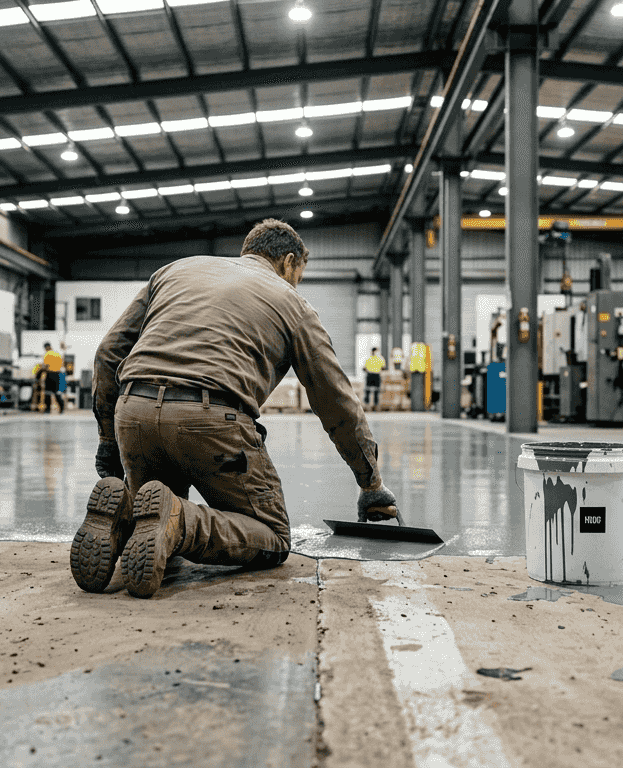
Professional application processes significantly impact coating performance. Surface preparation begins with diamond grinding to expose concrete pores and remove contaminants, creating the mechanical bond essential for long-term adhesion. A penetrating primer seals the substrate and provides the foundation layer. The base coat incorporates decorative elements like colour pigments or flake systems, followed by additional coats that build thickness and durability. Finally, a UV-stable topcoat protects underlying layers from environmental degradation whilst providing the desired gloss level and chemical resistance.
Polyurea and hybrid polyurethane coatings represent advanced alternatives that address epoxy’s limitations in challenging environments. Polyurea/polyurethane coatings extend lifespan and resist UV damage, critical factors in Queensland’s subtropical climate where intense sunlight causes standard epoxy to yellow and crack. These flexible coatings cure in hours rather than days, minimising business disruption during installation. Their elastomeric properties accommodate substrate movement without cracking, making them suitable for outdoor applications and areas with temperature fluctuations.
| Coating Type | Tensile Strength | Cure Time | UV Resistance | Typical Cost |
|---|---|---|---|---|
| Standard Epoxy | 300-500 psi | 24-72 hours | Poor (yellows) | $50-80/m² |
| Polyurea | 2000+ psi | 2-4 hours | Excellent | $90-140/m² |
| Hybrid Polyurethane | 800-1200 psi | 12-24 hours | Very Good | $70-110/m² |
Queensland’s environmental conditions pose specific challenges for floor coatings. UV exposure degrades standard epoxy resins through photo-oxidation, causing yellowing, chalking, and eventual surface breakdown. Outdoor applications in direct sunlight may show visible degradation within 12-18 months without proper UV protection. High humidity levels accelerate moisture vapour transmission through concrete slabs, potentially causing coating delamination if vapour barriers aren’t addressed during preparation. Temperature extremes create expansion and contraction cycles that stress rigid coatings, leading to cracking in improperly specified systems.
Pro Tip: Request a moisture vapour emission test before coating application, particularly for ground-level slabs. Readings above 3 pounds per 1000 square feet per 24 hours require moisture mitigation to prevent coating failure regardless of product quality.
Lifespan expectations vary dramatically based on coating type and environmental exposure. Indoor epoxy installations in climate-controlled facilities regularly achieve 15-20 year service lives with minimal maintenance. Outdoor epoxy applications without UV protection typically require recoating every 5-10 years as surface degradation progresses. Polyurea and hybrid systems extend outdoor lifespans to 15-20+ years even under Queensland’s harsh conditions, justifying their higher initial investment through reduced lifecycle costs and maintained appearance.
Equipped with an understanding of performance, let’s compare these coatings’ economic impact on property value and ROI.
Economic impact of floor coatings on property value and ROI
Floor coatings deliver measurable financial returns that extend well beyond their aesthetic improvements. Epoxy coatings boost property value by 5-10% whilst generating ROI of 70-100% on resale, positioning them among the most cost-effective property improvements available to Queensland business owners. These increases stem from multiple value drivers that appeal to both commercial buyers and facility managers evaluating long-term operational costs.
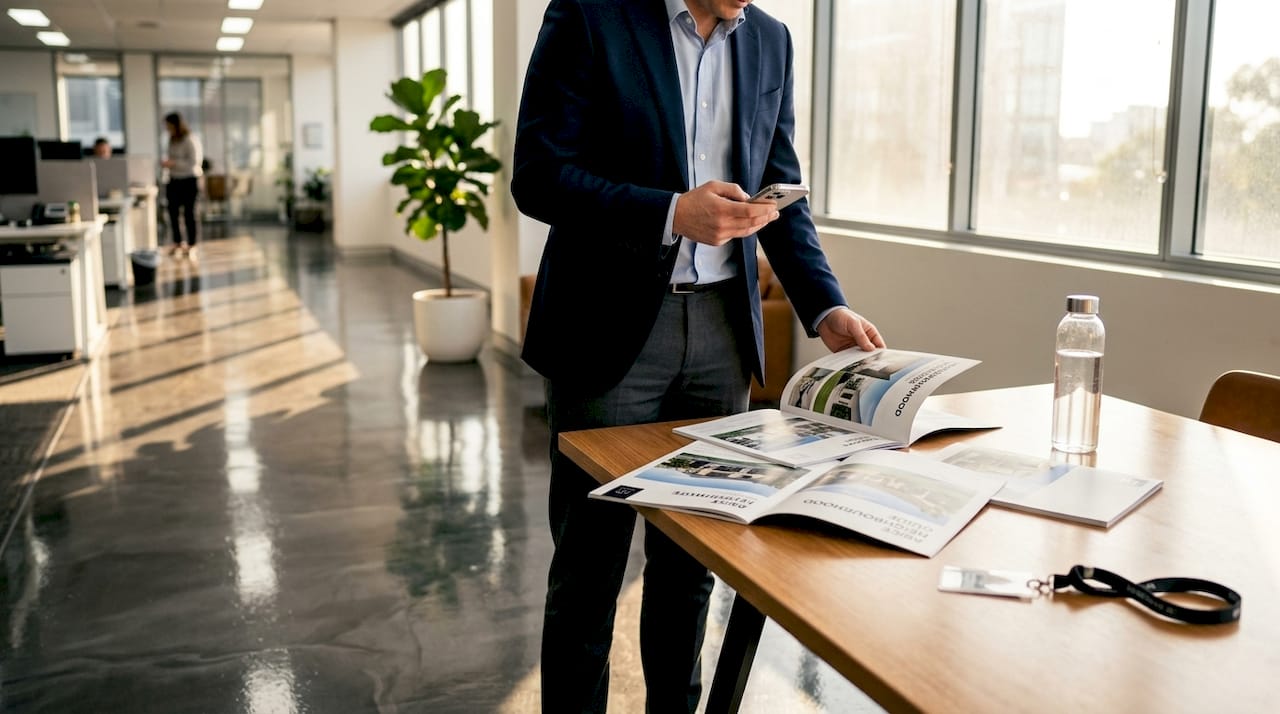
Curb appeal dramatically influences first impressions during property viewings or client visits. A professionally coated floor signals meticulous property maintenance and attention to detail, immediately elevating perceived value. Commercial buyers recognise that quality floor coatings indicate broader property care, reducing concerns about hidden maintenance issues. Retail and hospitality properties particularly benefit as attractive floors directly enhance customer experience, a factor increasingly reflected in commercial valuations.
The financial advantages compound through reduced operational costs. Sealed concrete floors eliminate dust generation that plagues bare concrete, reducing cleaning labour and HVAC maintenance costs. Chemical resistance prevents staining and damage from spills, avoiding costly repairs or replacements. Durability translates to 10-20 year service lives with minimal maintenance, spreading the initial investment across decades of reliable performance. These operational savings improve net operating income, directly increasing property valuations in commercial real estate assessments.
| Coating Type | Installation Cost | Value Increase | ROI on Resale | Lifespan |
|---|---|---|---|---|
| Standard Epoxy | $50-80/m² | 5-7% | 70-90% | 10-15 years |
| Polyurea | $90-140/m² | 7-10% | 80-100% | 15-20+ years |
| Polished Concrete | $60-100/m² | 6-9% | 75-95% | 20+ years |
Sales velocity improvements represent another significant economic benefit. Properties with professional floor coatings sell 5-8% faster than comparable properties with untreated concrete floors. Faster sales reduce carrying costs, opportunity costs, and market risk exposure. In Queensland’s competitive commercial property market, this timing advantage can mean the difference between selling at peak market conditions or facing extended listing periods during downturns.
Brand-aligned floor coatings create additional value through customer perception and loyalty. Retail environments with cohesive branding including floor design report higher customer satisfaction scores and increased repeat visit rates. These factors directly impact business valuation multiples when selling operating businesses alongside property assets. The floor becomes part of the intangible brand equity that sophisticated buyers recognise and compensate for in purchase negotiations.
After clarifying the financial benefits, we now turn to practical advice on selecting and applying the best floor coatings for your Queensland business.
Choosing and applying the right floor coatings for your brand
Successful floor coating projects begin with thorough environmental assessment and substrate evaluation. Queensland’s intense UV exposure, high humidity levels, and temperature fluctuations demand coating systems specifically engineered for subtropical conditions. Outdoor applications require polyurea or hybrid systems with proven UV stability, whilst indoor climate-controlled spaces can utilise cost-effective epoxy systems. Assess sun exposure patterns throughout the day, identifying areas receiving direct sunlight that necessitate enhanced UV protection.
Substrate movement presents a critical but often overlooked selection factor. Concrete slabs on reactive clay soils common throughout Queensland experience seasonal expansion and contraction that rigid epoxy coatings cannot accommodate. Failed rigid epoxy on moving substrates requires flexible polyurea remediation to avoid peeling and compliance issues, a costly mistake that proper initial specification prevents. Engage a structural engineer to assess slab stability before committing to coating type, particularly for older buildings or areas with known soil movement.
Pro Tip: Observe existing floor surfaces for hairline cracks or previous coating failures. These indicators reveal substrate movement that will compromise rigid coatings regardless of application quality. Flexible polyurea systems accommodate this movement, preventing repeated failures.
The application process follows a precise sequence that determines long-term performance:
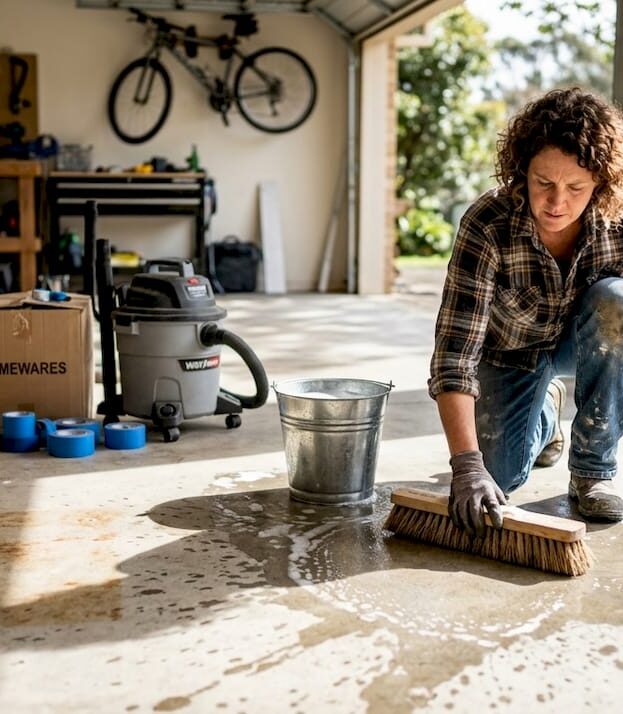
Surface preparation through diamond grinding removes contaminants, opens concrete pores, and creates the mechanical profile essential for adhesion. This step accounts for 70% of coating success.
Moisture testing using calcium chloride or relative humidity probes identifies vapour transmission issues requiring mitigation before coating application.
Crack repair and joint filling addresses existing defects using flexible sealants that prevent telegraph cracking through new coatings.
Primer application penetrates the substrate, seals porosity, and provides the chemical bond for subsequent layers. Allow full cure time specified by manufacturer.
Base coat installation incorporates colour pigments, decorative flakes, or metallic effects that define the floor’s appearance. Multiple coats build thickness and hiding power.
Topcoat sealing with UV-stable clear coats protects underlying layers whilst providing the specified gloss level and chemical resistance.
Maintenance protocols preserve both coating integrity and brand appearance over decades of service. Implement daily dust mopping or auto-scrubbing to remove abrasive particles before they scratch surfaces. Weekly cleaning with pH-neutral products maintains gloss without degrading the coating matrix. Quarterly inspections identify minor damage requiring prompt repair before it spreads. Annual professional cleaning and optional gloss restoration keeps floors looking new whilst extending service life beyond typical expectations.
Choosing durable epoxy coatings requires balancing immediate budget constraints against lifecycle costs and brand objectives. Whilst polyurea systems command premium pricing, their extended lifespan and superior Queensland climate performance often deliver lower total cost of ownership. Epoxy remains viable for indoor applications where UV exposure and substrate movement aren’t concerns. Hybrid systems occupy the middle ground, offering enhanced flexibility and UV resistance at moderate cost premiums.
Having covered selection and application, here is a brief promotional guide to Floor X Industries’ relevant services to help you upgrade your floors effectively.
Enhance your brand with expert floor coatings
Floor X Industries specialises in transforming Queensland commercial spaces through precision epoxy floor coatings engineered for subtropical durability and brand alignment. Our consultation process begins with comprehensive site assessment, evaluating substrate conditions, environmental factors, and your specific branding requirements to recommend optimal coating systems. We offer custom colour matching to exact specifications, logo embedding through precision stencil techniques, and decorative options including our popular hyper flake stone range that adds texture and visual interest.
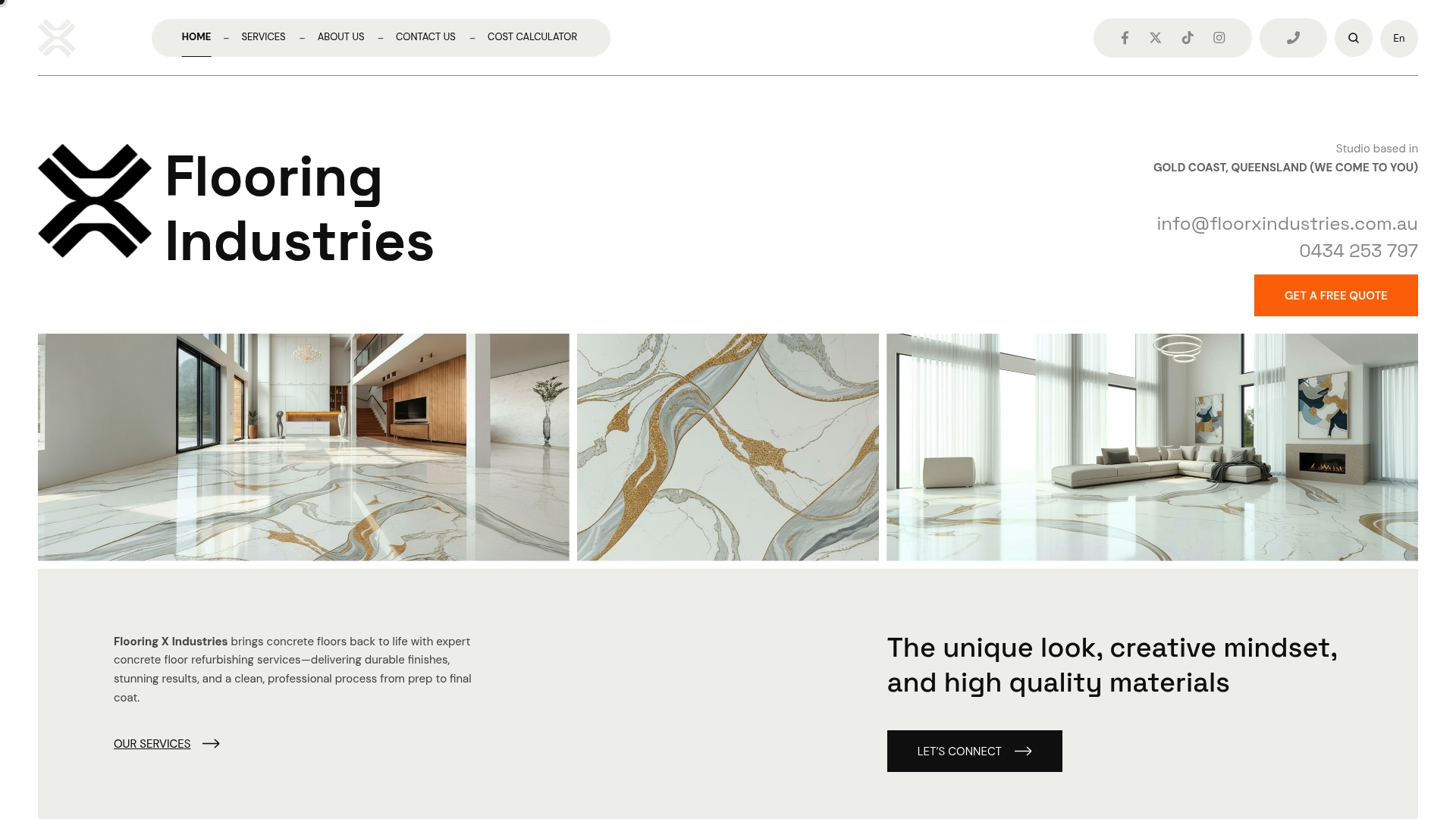
Our technical expertise extends to choosing between epoxy and polyurethane systems based on your unique application requirements. We specify UV-stable topcoats for Queensland’s intense sunlight, flexible systems for substrates with movement potential, and rapid-cure options that minimise business disruption. Every installation follows Australian standards with proven surface preparation techniques, multi-layer application processes, and quality assurance protocols that ensure long-term performance. Professional application maximises both coating lifespan and brand impact, protecting your investment whilst elevating your facility’s appearance.
To round out the guide, here are common questions about floor coatings in branding answered for Queensland business owners.
Frequently asked questions
What types of floor coatings are best for outdoor branding in Queensland?
Polyurea coatings cure faster and resist UV damage better than epoxy outdoors in Queensland, making them the preferred choice for patios, walkways, and exposed commercial areas. Standard epoxy yellows and degrades under Queensland’s intense sunlight within 12-18 months without protective topcoats. Polyurea’s elastomeric properties also accommodate temperature-driven substrate expansion without cracking, whilst its rapid cure time minimises weather-related installation delays.
How much can floor coatings increase my property’s value?
Epoxy coatings boost property value by 5-10% and can speed up sales by 5-8%, delivering ROI of 70-100% on the initial investment. Commercial properties particularly benefit as buyers recognise reduced maintenance costs and enhanced tenant appeal. The value increase stems from improved aesthetics, demonstrated property care, and operational cost savings that enhance net operating income calculations used in commercial valuations.
What maintenance do floor coatings require to retain brand appearance?
Regular cleaning with non-abrasive, pH-neutral products preserves coating gloss and colour integrity without degrading the protective matrix. Daily dust mopping removes abrasive particles before they scratch surfaces, whilst weekly auto-scrubbing maintains professional appearance. Prompt repairs of chips or scratches prevent damage from spreading and moisture infiltration that leads to delamination. Quarterly inspections identify maintenance needs early, and annual professional cleaning with optional gloss restoration keeps floors looking new for decades.
Can existing floors be recoated to update branding without full replacement?
Existing epoxy or polyurethane floors in good condition can be recoated after proper surface preparation, offering a cost-effective brand refresh. The process involves light abrading to create mechanical bond, thorough cleaning to remove contaminants, and application of new colour or decorative layers topped with fresh sealer. This approach costs 40-60% less than full removal and replacement whilst achieving updated brand alignment. Severely damaged or improperly bonded existing coatings require full removal to ensure new coating adhesion and longevity.