

Most business owners think industrial floor maintenance ends with a good scrub and some polish. That’s a costly mistake. Without proper industrial floor sealing, your concrete joints deteriorate under forklift traffic, chemical spills infiltrate the substrate, and what starts as minor edge damage becomes expensive structural repairs. Queensland’s industrial facilities face unique challenges from heavy machinery, temperature fluctuations, and chemical exposure that demand professional sealing solutions. This guide explains what industrial floor sealing actually involves, which materials and methods deliver lasting results, and how to choose the right approach for your warehouse, manufacturing plant, or commercial facility.
Table of Contents
- Key takeaways
- What is industrial floor sealing and why does it matter?
- Key materials and methods used in industrial floor sealing
- Comparing sealants and coatings: choosing the right solution for your floor
- Practical considerations for industrial floor sealing in Queensland
- Explore reliable industrial floor sealing solutions
- Frequently asked questions
Key Takeaways
| Point | Details |
|---|---|
| Definition and purpose | Industrial floor sealing fills joints in concrete floors with high performance sealants to prevent edge damage, moisture and chemical infiltration, extending floor life. |
| Materials and methods | Selection of polyurethane or epoxy sealants with thorough joint cleaning and routing creates a durable flexible barrier that moves with the concrete. |
| Professional installation | Engaging qualified contractors in Queensland helps meet safety, environmental and chemical resistance requirements and ensures correct ongoing maintenance. |
| Durability and maintenance | Proper sealing reduces long term maintenance costs by protecting joints from moisture, chemical exposure and forklift traffic, and supports easier future resealing. |
What is industrial floor sealing and why does it matter?
Industrial floor sealing specifically targets the joints and control cuts in concrete industrial floors, filling them with high-performance sealants like polyurethane or epoxy to prevent edge spalling, debris infiltration, and structural deterioration. This differs fundamentally from topical coatings or penetrating sealers that cover entire floor surfaces. The joints in concrete floors are deliberate weak points designed to control cracking as concrete expands and contracts, but they become vulnerability zones when left unsealed.
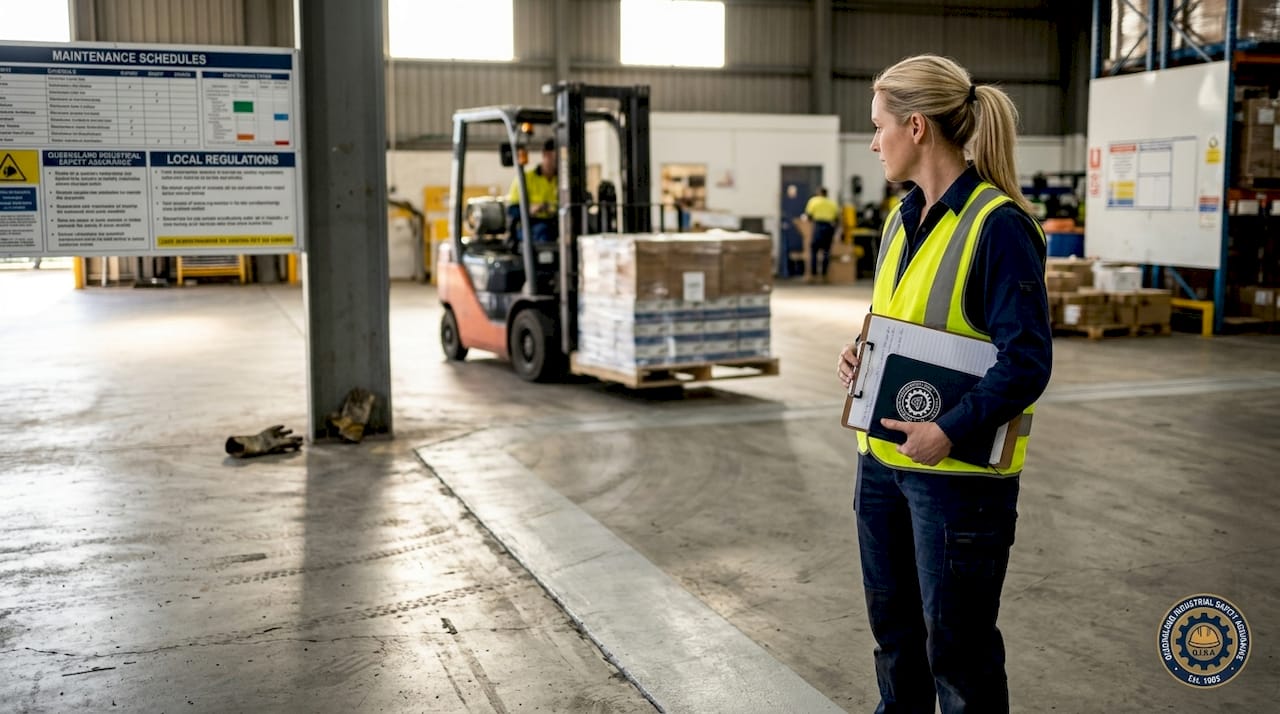
Queensland’s industrial environments create particularly harsh conditions for concrete floors. Heavy forklift traffic concentrates enormous loads on joint edges, causing them to chip and crumble without proper protection. Chemical spills from manufacturing processes, cleaning agents, and petroleum products seep into unsealed joints, attacking the concrete substrate and reinforcing steel. Temperature fluctuations between climate-controlled interiors and Queensland’s subtropical heat accelerate joint movement and deterioration.
Professional joint sealing addresses these challenges by creating a flexible, durable barrier that moves with the concrete while protecting edges from impact damage. The sealant prevents moisture ingress, blocks chemical penetration, and supports joint edges against concentrated wheel loads. This protection extends floor lifespan dramatically, reduces maintenance costs, and prevents the safety hazards of damaged joints that can catch forklift wheels or create trip hazards for workers.
Many property managers confuse joint sealing with industrial floor coatings that cover entire surfaces. Both serve important but distinct functions. Joint sealing protects the structural integrity of concrete slabs by maintaining joint performance, while topical coatings provide surface protection, chemical resistance, and aesthetic enhancement. The most durable industrial floors combine both approaches, with properly sealed joints beneath a protective coating system.
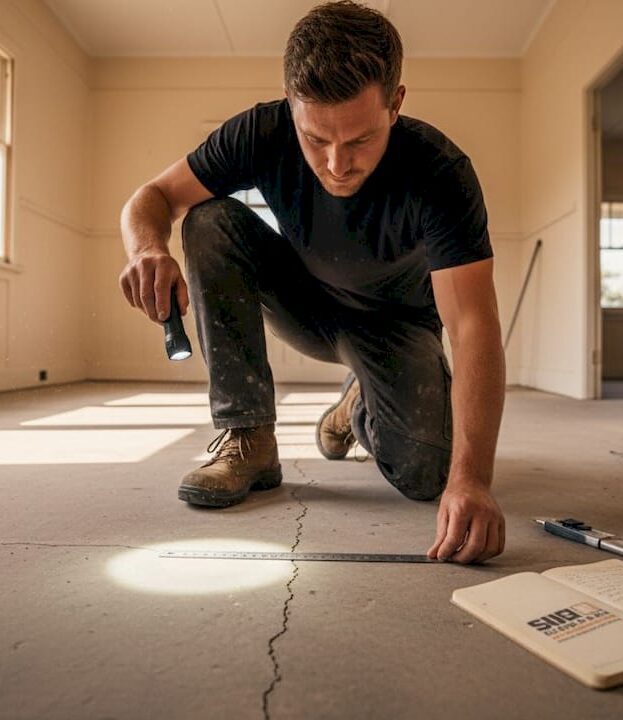
Pro Tip: Inspect your floor joints quarterly for signs of sealant degradation like cracking, debonding, or excessive wear. Early resealing of damaged sections costs far less than repairing spalled joint edges or replacing damaged concrete panels.
Key materials and methods used in industrial floor sealing
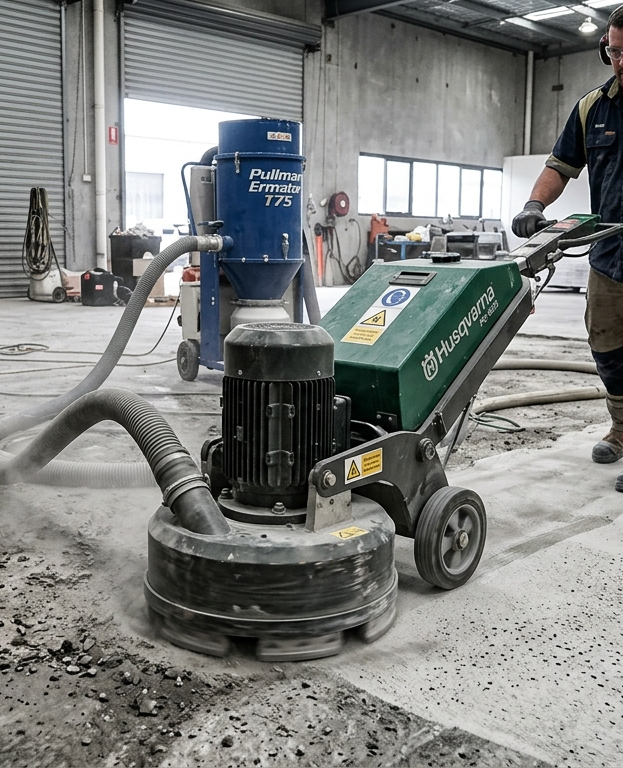
Successful industrial floor sealing starts with meticulous surface preparation. Joints must be thoroughly cleaned using mechanical routing or grinding to remove old sealant, debris, laitance, and contaminants. Degreasing with appropriate solvents eliminates oils that prevent sealant adhesion. The joint faces should be clean, sound concrete with a slight profile for mechanical bonding. Routing joints to uniform width and depth creates optimal geometry for sealant performance.
Material selection determines performance under specific operating conditions. Polyurethane sealants dominate industrial applications because they balance excellent abrasion resistance, chemical resistance, and flexibility to accommodate joint movement. They bond tenaciously to concrete, resist petroleum products, and maintain elasticity through temperature cycles. Epoxy sealants excel in static joints with extreme chemical exposure, offering superior chemical resistance but less flexibility than polyurethane. Silicone sealants should be avoided in industrial settings despite their flexibility, as they degrade rapidly when exposed to petroleum products and lack the abrasion resistance for forklift traffic.
The installation process requires precision technique:
- Route joints to specified width and depth, removing deteriorated edges
- Vacuum and blow out all dust and debris from joint cavity
- Degrease joint faces with appropriate solvent and allow complete drying
- Install closed-cell backer rod or bond breaker tape at proper depth
- Apply sealant using professional dispensing equipment for consistent results
- Tool sealant surface flush with floor for forklift traffic
- Allow full cure before exposing to traffic or chemical loads
Backer rod installation is critical but often overlooked. This compressible foam rod controls sealant depth and prevents three-sided adhesion that causes premature failure. The sealant should only bond to the two joint faces, remaining free to compress and extend as the joint moves. Proper backer rod placement creates the ideal width-to-depth ratio of 2:1 for optimal sealant performance.
| Sealant type | Shore A hardness | Movement capability | Best applications |
|---|---|---|---|
| Polyurethane | 35-45 | ±25% joint movement | High-traffic warehouses, forklift areas, general industrial |
| Epoxy | 60-80 | ±5% joint movement | Chemical processing areas, static joints, extreme exposure |
| Hybrid systems | 40-50 | ±20% joint movement | Mixed-use facilities, moderate chemical and traffic loads |
Professional installers specify sealants with Shore A hardness between 35 and 45 for optimal forklift traffic performance. Softer sealants tear under wheel loads, while harder formulations lack the flexibility to accommodate joint movement without debonding. Quality polyurethane sealants in this hardness range typically last 15-20 years in demanding industrial environments when properly installed.
Pro Tip: Never apply sealant in joints wider than the manufacturer’s maximum recommended width. Oversized joints require special wide-joint sealants or alternative solutions like steel plates to prevent premature failure.
Comparing sealants and coatings: choosing the right solution for your floor
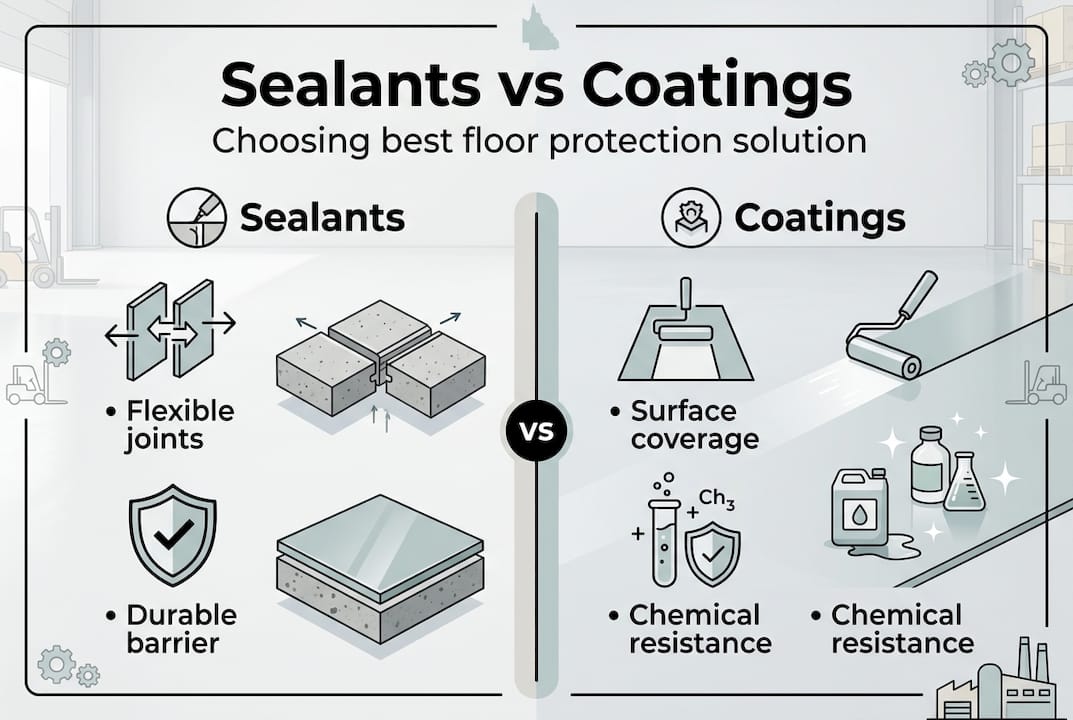
Understanding the distinction between joint sealants and other floor protection methods prevents costly misapplications. Joint sealants fill expansion joints and control cuts with flexible materials designed to accommodate movement while protecting joint edges. Penetrating sealers like silicates and silanes soak into concrete pores, densifying the surface and reducing porosity without creating a surface film. Topical coatings like epoxy and polyurethane create protective films over entire floor surfaces, providing chemical resistance, abrasion protection, and aesthetic enhancement.
Polyurethane joint sealants offer the best balance of flexibility and durability for moving joints in high-traffic industrial floors. They accommodate the ±25% joint movement typical in Queensland’s temperature variations while resisting forklift wheel loads, chemical spills, and abrasion. Their elasticity prevents the debonding and cracking that plague rigid sealants when joints expand and contract. Epoxy sealants excel in static joints with severe chemical exposure, such as those in chemical processing facilities or areas with concentrated acid or solvent use. Their superior chemical resistance outweighs their limited flexibility in applications where joint movement is minimal.
The risks of inappropriate material selection become expensive quickly. Silicone sealants, despite their excellent flexibility and weather resistance in building applications, fail rapidly in industrial floors exposed to petroleum products. Oils and solvents cause silicones to swell, soften, and debond, leaving joints unprotected. Using standard construction sealants instead of industrial-grade formulations results in premature wear, requiring frequent replacement and creating ongoing maintenance costs.
Broader industrial floor protection often involves penetrating sealers or topical coatings that complement joint sealing. Penetrating sealers densify concrete, reduce dusting, and provide some chemical resistance without changing surface appearance. They work well for light industrial applications but lack the protection needed for heavy chemical exposure or severe abrasion. Topical epoxy and polyurethane coatings create durable, chemical-resistant surfaces ideal for manufacturing facilities, warehouses, and commercial spaces requiring both protection and aesthetic appeal.
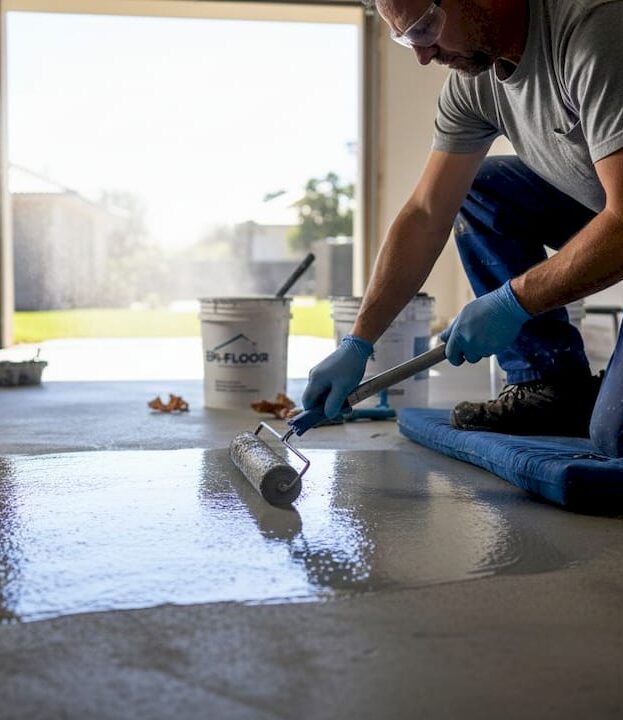
Many Queensland facilities benefit from combining properly sealed joints with epoxy coatings. The joint sealant maintains structural integrity and prevents substrate damage, while the topical coating provides comprehensive surface protection, chemical resistance, and a clean, professional appearance. This layered approach delivers maximum durability and return on investment.
- Polyurethane coatings over sealed joints provide UV stability for facilities with natural light exposure
- Epoxy coatings offer superior chemical resistance for manufacturing environments
- Decorative options like flake or metallic finishes combine protection with aesthetic enhancement
- Regular maintenance becomes simpler with sealed joints beneath protective coatings
Lifespan expectations vary significantly by material and application. Quality polyurethane joint sealants typically last 15-20 years in demanding industrial environments, while epoxy sealants may last 20-25 years in appropriate applications. Penetrating sealers require reapplication every 3-5 years depending on traffic and exposure. Topical epoxy coatings generally last 10-15 years before requiring renewal, though high-traffic areas may show wear sooner.
Pro Tip: Schedule joint sealing before applying topical coatings. Attempting to seal joints after coating installation risks damaging the coating and creates adhesion challenges at the joint-coating interface.
Practical considerations for industrial floor sealing in Queensland
Timing is critical for sealing success. New concrete must cure for 14-28 days before sealant application, allowing sufficient moisture evaporation and strength development. Sealing too early traps moisture that causes sealant debonding and concrete deterioration. For existing floors, schedule sealing during planned shutdowns or low-activity periods to allow proper surface preparation and cure time without disrupting operations.
Queensland property managers should prioritise QBCC-licensed installers familiar with local regulations and environmental conditions. Licensed contractors understand WorkSafe QLD requirements for slip resistance, chemical safety, and proper ventilation during installation. They specify appropriate materials for Queensland’s subtropical climate, accounting for temperature ranges, humidity levels, and seasonal variations that affect sealant performance. Verify installer credentials, request references from similar industrial projects, and confirm they carry appropriate insurance coverage.
Moisture testing before coating applications prevents catastrophic failures. Concrete slabs on grade can transmit moisture vapour from the soil beneath, even in seemingly dry conditions. Excessive moisture vapour transmission causes coatings to blister, debond, and fail prematurely. Professional installers conduct calcium chloride or relative humidity testing to verify moisture levels fall within acceptable limits before coating application. If levels exceed specifications, moisture mitigation systems must be installed before proceeding.
Professional surface preparation through mechanical grinding or scarifying creates the surface profile necessary for optimal sealant and coating adhesion. This removes laitance, curing compounds, oils, and surface contaminants while opening concrete pores for mechanical bonding. Inadequate preparation is the leading cause of premature sealant and coating failure, making this step non-negotiable for long-term performance.
- Conduct quarterly visual inspections of sealed joints for signs of wear or damage
- Clean spills promptly to prevent chemical attack on sealants and coatings
- Address minor sealant damage immediately before it propagates to adjacent areas
- Schedule professional reassessment every 5 years to plan maintenance and renewal
- Document installation dates, materials used, and maintenance history for future reference
Return on investment from quality industrial floor sealing becomes evident quickly. Preventing joint edge spalling eliminates costly concrete repairs that can exceed $200 per linear metre. Sealed joints reduce cleaning time and costs by preventing debris accumulation in cracks. Production downtime for emergency floor repairs disappears when joints remain intact and functional. Safety improves as sealed joints eliminate trip hazards and prevent forklift wheel damage that causes accidents.
“Concrete must cure 14-28 days before sealing; inadequate sealing causes spalling; testing and recutting joints prevents cracking.” — Industrial sealing best practices
Queensland’s industrial facilities operating forklifts, heavy machinery, or handling chemicals cannot afford to neglect joint sealing. The modest upfront investment in professional sealing delivers decades of protection, reduced maintenance costs, and improved safety. Combined with appropriate industrial epoxy coatings, sealed joints create industrial floors that withstand the demanding conditions of modern Queensland facilities while maintaining professional appearance and functionality.
Pro Tip: Photograph your floor joints before sealing and at annual intervals afterward. Visual documentation helps track performance, identify problem areas early, and justify maintenance budgets to stakeholders.
Explore reliable industrial floor sealing solutions
Queensland businesses need industrial floor sealing solutions built for local conditions and demanding applications. FloorX Industries delivers professional joint sealing and comprehensive industrial floor coatings backed by over a decade of specialised experience across the Gold Coast and wider Queensland region.

Our licensed installers apply industrial-grade polyurethane and epoxy sealants engineered for Queensland’s subtropical climate, heavy forklift traffic, and chemical exposure. We combine expert joint sealing with durable epoxy floor coatings that transform warehouses, manufacturing facilities, and commercial spaces into resilient, attractive floors that protect your investment for decades. From surface preparation through final coating, we ensure compliance with Australian standards and WorkSafe QLD requirements while delivering results that exceed expectations. Contact FloorX Industries today to discuss your industrial flooring project and discover how professional sealing extends floor life while reducing long-term maintenance costs.
Frequently asked questions
What is the best sealant for industrial floors?
Polyurethane sealants with Shore A hardness between 35 and 45 provide the best performance for most industrial floor joints, balancing flexibility for joint movement with durability for heavy forklift traffic. Epoxy sealants suit static joints in areas with extreme chemical exposure where movement is minimal.
How long should concrete cure before sealing joints?
New concrete requires 14-28 days of curing before sealant application to allow adequate moisture evaporation and strength development. Sealing too early traps moisture that causes debonding and concrete deterioration. Professional installers conduct moisture testing to verify readiness before proceeding.
Why should I use licensed installers for floor sealing?
QLBCC-licensed installers ensure compliance with Queensland building codes, WorkSafe QLD safety requirements, and Australian standards for slip resistance and chemical safety. They possess the training, equipment, and experience to properly prepare surfaces, select appropriate materials, and install sealants that perform reliably in demanding industrial environments.
How long do industrial floor sealants last?
Quality polyurethane joint sealants typically last 15-20 years in demanding industrial environments when properly installed and maintained. Epoxy sealants may last 20-25 years in appropriate applications with minimal joint movement. Lifespan depends on traffic levels, chemical exposure, maintenance practices, and installation quality.
What maintenance do sealed industrial floors require?
Conduct quarterly visual inspections for sealant damage, clean chemical spills promptly, and address minor damage immediately before it spreads. Schedule professional reassessment every five years to plan maintenance and renewal. Regular cleaning with appropriate methods maintains both sealant and coating performance.
Can I seal joints after applying floor coatings?
Joint sealing should always precede topical coating application. Attempting to seal joints after coating installation risks damaging the coating and creates adhesion challenges where sealant meets coating. Professional installers complete joint sealing, allow full cure, then apply coatings over the sealed joints for optimal results.